You've tried everything. The diets, the supplements, the therapies. Yet your body remains in a state of low-grade chaos. Your digestion is unpredictable. Your heart races at small stressors. You feel "on edge" for no reason. Sleep doesn't restore you. Anxiety lives in your chest like a permanent resident.
Doctors tell you "everything looks normal." But you know—you feel—that something is off. Your body is sending signals you can't decipher, and no amount of positive thinking seems to reset the system.
What if the problem isn't in your organs, your blood, or your genes? What if it's in the wiring—the single nerve that connects everything, that tells your body when to fight, when to rest, and when to heal?
What the Vagus Nerve Actually Is:
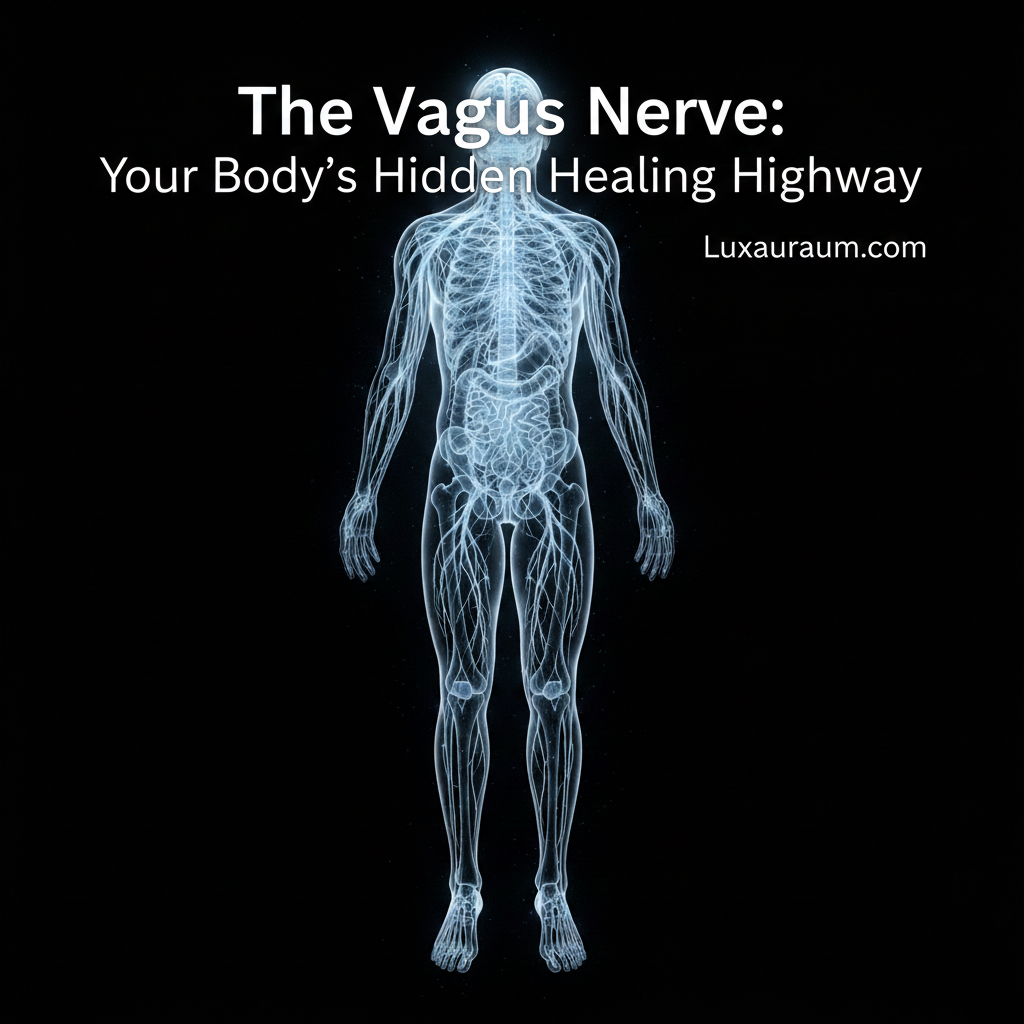
The vagus nerve is the tenth cranial nerve, designated CN X. It is the longest and most complex nerve in your body. It begins in your brainstem, travels down through your neck, and branches into your heart, lungs, and all the way to your digestive tract.
"Vagus" means "wandering" in Latin. This nerve wanders through your entire body, connecting your brain to your organs. It is the physical infrastructure of the mind-body connection that spiritual traditions have described for millennia.
Here's what the vagus nerve actually does:
1. It is the commander of your parasympathetic nervous system (rest and digest).
While your sympathetic nervous system handles "fight or flight," the vagus nerve is responsible for the opposite: slowing your heart rate, lowering blood pressure, calming inflammation, and signaling safety to every organ.
2. It is a two-way superhighway.
Eighty percent of vagus nerve fibers carry information from the body to the brain. Your gut doesn't just listen to your brain—your brain listens to your gut. This is the physical basis of "gut feelings" and intuition.
3. It regulates inflammation.
The vagus nerve releases acetylcholine, a neurotransmitter that acts as a brake on the immune system's inflammatory response. When your vagus nerve is weak, inflammation runs unchecked—contributing to autoimmune disease, depression, and chronic illness.
4. It controls your heart rate variability (HRV).
HRV is the slight variation in time between each heartbeat. High HRV means your vagus nerve is strong—your heart responds flexibly to changing demands. Low HRV means your vagus nerve is weak—your nervous system is stuck in threat mode.
The hard truth: Most modern humans have low vagal tone. Chronic stress, poor sleep, processed food, and sedentary living have weakened this nerve. Your body's built-in healing system has been turned down, and you're running on emergency power 24/7.
HOW A WEAK VAGUS NERVE FEELS (The Symptoms):
· You have poor digestion—bloating, IBS, constipation
· Your heart races at small triggers
· You can't "come down" after stress
· Your voice is weak or you get hoarse easily
· You have trouble swallowing or feel a lump in your throat
· You feel anxious for no clear reason
· You're sensitive to loud noises
· You have chronic inflammation (joint pain, skin issues)
· You feel "disconnected" from your body
· Social situations drain you because your nervous system never settles
If any of this sounds familiar, your vagus nerve needs attention.
THE SPIRITUAL CONNECTION (Why Mystics Knew This):
The ancients didn't have anatomy labs. But they had experience. They knew that certain practices—chanting, deep breathing, cold exposure, prostration—produced states of profound calm, connection, and healing.
They called this "opening the heart," "connecting to the divine," "entering the presence."
They were stimulating their vagus nerves.
When you chant "Om" and feel a vibration in your chest, you're stimulating the vagus nerve where it passes through the larynx and pharynx. When you take a deep, slow breath and feel your heart slow, you're activating the vagal brake. When you immerse in cold water and feel a rush of clarity, you're shocking the vagus into high alert, followed by deep parasympathetic rebound.
The mystics mapped the territory. We now have the anatomy.
FIX THE BODY FIRST: The Vagus Nerve Activation Protocol
You don't need expensive devices or complicated therapies. Your body already knows how to activate this nerve. You just need to remember the moves.
The Daily 5-Minute Vagus Reset:
1. The Deep, Slow Breath (1 minute)
Sit comfortably. Inhale through your nose for 4 counts. Exhale through your nose for 6 counts. The key is the extended exhale—this directly stimulates the vagus nerve and activates the parasympathetic system. Do this 6 times.
2. The Hum or Chant (1 minute)
Humming creates vibration in the throat that directly stimulates the vagus nerve. Choose any note that feels resonant. Hum for 60 seconds. Feel the vibration in your chest. This is why mantras work.
3. The Cold Water Splash (30 seconds)
At the end of your shower, turn the water to cold for 30 seconds. If you can't handle full cold, splash cold water on your face and the back of your neck. Cold stimulates the vagus nerve through the "diving reflex"—an ancient survival mechanism that slows metabolism and conserves energy.
4. The Gargle (30 seconds)
Gargle vigorously with water until you almost gag. The gag reflex is mediated by the vagus nerve. This wakes it up. Do this once daily.
5. The Eye Massage (1 minute)
Close your eyes. Gently massage your closed eyelids with your fingertips. The vagus nerve has connections to the trigeminal nerve in your face. Gentle pressure here signals safety.
6. The Right-Side Lie Down (1 minute)
Lie on your right side for 60 seconds. Studies show this position optimizes vagal activity. It's also the traditional recommendation for post-meal rest in many cultures.
THE WEEKLY PRACTICES (Deepen the Healing):
Cold Immersion (Once Weekly):
If you have access, a 2-3 minute cold plunge or cold shower at 50-60°F activates the vagus nerve powerfully. Start with 30 seconds and build. This is not torture—it's medicine.
Yoga or Tai Chi (Twice Weekly):
Slow, deliberate movements combined with breathwork have been shown to increase HRV and vagal tone. The emphasis is on slow—fast, jerky movements activate sympathetic, not parasympathetic.
Social Connection (Daily):
The vagus nerve is part of the "social engagement system." Genuine connection—eye contact, warm conversation, laughter—directly stimulates it. Loneliness isn't just emotional; it's physiological. Your nerve needs other humans.
Singing (Weekly):
Join a choir, sing in the car, belt in the shower. Singing is controlled, prolonged vagal stimulation through the larynx. It's medicine disguised as joy.
THE DAILY HABITS THAT PROTECT YOUR VAGUS NERVE:
1. Eat Slowly, Chew Thoroughly
Digestion begins in the mouth. Chewing signals the vagus nerve to prepare the stomach. Wolfing food bypasses this signal, leaving digestion incomplete.
2. Breathe Through Your Nose
Mouth breathing bypasses the nasal cavity's nitric oxide production, which helps regulate vagal tone. Nasal breathing, especially at night, maintains vagal health.
3. Reduce Chronic Inflammation
Sugar, processed oils, and alcohol inflame the body. Inflammation suppresses vagal activity. Your nerve works best in a clean system.
4. Get Morning Light
Sunlight exposure early in the day sets your circadian rhythm, which is intimately connected to vagal tone through the sleep-wake cycle.
5. Practice Gratitude
This sounds soft, but it's measurable. Gratitude practices shift nervous system state toward safety, increasing HRV and vagal activity. The emotion you feel has a physiological signature.
HOW YOU KNOW IT'S WORKING:
Within one week of consistent practice:
· Your digestion improves (less bloating, more regular)
· Your heart rate variability increases (measurable with wearable devices)
· You recover faster from stress
· Your voice feels stronger
· You feel more "present" in your body
· Anxiety attacks become less frequent or intense
· You sleep deeper
· You feel more connected to others
Within one month:
· Chronic inflammation markers drop
· Mood stabilizes
· You handle conflict without dysregulation
· Your intuition feels clearer (the gut-brain highway is open)
· You experience moments of genuine peace—not forced, but natural
The vagus nerve is not mystical. It is not "energy work" in the vague sense. It is a physical structure—a bundle of neurons that connects your brain to your body. When it's strong, your body can heal, rest, digest, and connect. When it's weak, you're stuck in survival mode, fighting enemies that don't exist, while your organs slowly deteriorate.
The practices above are not optional wellness trends. They are maintenance for your nervous system. They are the oil changes and tire rotations your body needs to function.
You don't need to "believe" in any of this for it to work. The nerve doesn't care about your beliefs. It responds to stimulation. Hum, breathe, splash cold water, connect, and it wakes up. Ignore it, and it atrophies.
This is not magic. This is anatomy.
Your body has a built-in healing system. It's not hidden in a temple or guarded by secret masters. It's wandering through your chest, your throat, your gut, waiting for you to notice it.
The mystics stumbled upon it by accident—chanting in caves, fasting in deserts, praying in darkness. They called the results "grace," "enlightenment," "union with the divine."
We now know what they were actually doing. They were stimulating the vagus nerve.
You can do the same thing, in your living room, in five minutes a day. And you will heal.
Not because the universe intervenes. Because your body finally gets the signal it's been waiting for:
"You are safe. You can rest now. Let the healing begin."
What's one vagus-activating practice you'll try today?









Collective Insights
Be the First to Share
Your insights could spark meaningful conversations. Share your thoughts above!
Share Your Insight