For 5,000 years, acupressure has been used to treat pain, stress, nausea, and disease. Ancient Chinese medicine claimed it works by balancing "qi"—life energy flowing through invisible meridians.
Modern science has tested these claims. Some benefits are confirmed. Others remain unproven. And the mechanism is likely not what the ancients thought.
You've heard about acupressure. Maybe you've tried pressing points on your wrist for nausea or your temples for headaches. Sometimes it works. Sometimes it doesn't. You wonder: Is this real medicine or placebo? Am I wasting my time? Which points actually do something?
Here's the truth that changes everything:
Acupressure does work for certain conditions. Multiple high-quality studies have confirmed its effectiveness for pain, nausea, anxiety, depression, and sleep. But the mechanism is likely neurological—not mystical. And some traditional claims remain scientifically unproven.
Acupressure is a traditional Chinese medicine technique that involves applying pressure to specific points on the body. The traditional explanation is that these points lie on "meridians" through which "qi" (life energy) flows, and stimulating them restores balance.
Modern science has a different explanation. Pressure on these points stimulates nerve endings, which send signals to the brain. This can trigger the release of endorphins (natural painkillers), activate the parasympathetic nervous system (calming), and modulate pain pathways in the spinal cord.
The effects are real. The mechanism is neurological, not mystical.
WHAT ACUPRESSURE IS
Acupressure originated in ancient China and is believed to have been practiced for over 5,000 years. It is based on the same principles as acupuncture, which involves inserting needles into the body to stimulate specific points. However, acupressure uses finger pressure instead of needles.
The technique involves applying pressure to specific points—called acupoints—on the body. The traditional Chinese medicine (TCM) explanation is that these points lie on 14 meridians (energy-carrying channels), and stimulating them clears blockages in the flow of "qi" .
The practice was developed as part of traditional Chinese medicine and was used to treat a wide range of physical and emotional ailments. Over time, acupressure spread to other parts of Asia, and it is now used all over the world as a holistic healing technique .
How it works (Western medical explanation): Pressure on acupoints stimulates nerve endings, which send signals to the brain and spinal cord. This can trigger the release of endorphins (natural painkillers), activate the parasympathetic nervous system (which promotes relaxation), and modulate pain perception through the "gate control" mechanism .
BENEFITS PROVEN BY SCIENCE
The following benefits have been demonstrated in systematic reviews, meta-analyses, or large randomized controlled trials published in peer-reviewed journals.
1. Pain Relief
What the research shows: Multiple systematic reviews have confirmed that acupressure reduces pain.
A 2025 network meta-analysis of 37 randomized controlled trials including 3,066 cancer patients found that auricular acupressure (acupressure on ear points) and acupoint massage significantly improved pain compared to placebo .
A 2025 systematic review and meta-analysis on labor pain found that acupressure significantly reduces labor pain compared to touch (MD = -1.19), sham (MD = -1.41), and no intervention (MD = -2.32) on pain scales. Both the SP6 point (inside the leg, above the ankle) and LI4 point (between thumb and index finger) were effective .
A 2019 study found that just three minutes of acupressure was more effective in acutely decreasing pain intensity in athletes who sustained an acute musculoskeletal sports injury compared to control groups .
What this means for you: Acupressure can be a useful tool for managing pain—especially for cancer pain, labor pain, and acute injuries. It is not a replacement for medical pain management but can be an effective complementary approach.
2. Stress, Anxiety, and Depression
What the research shows: Acupressure significantly reduces psychological distress.
A 2023 randomized controlled trial of 40 older adults found that auricular acupressure significantly reduced depression, anxiety, and stress compared to placebo (depression: t=5.56, p<.001; anxiety: t=3.53, p=.001; stress: t=3.55, p=.001) .
A 2025 systematic review and meta-analysis of 15 randomized controlled trials including 1,149 older adults with cognitive impairment found that acupressure significantly improved depression compared to control groups (standardized mean difference = -1.33) .
A 2022 systematic review published in the World Journal of Psychiatry concluded that acupressure significantly reduced symptoms in people with mild to moderate depression compared to control groups .
What this means for you: Acupressure—particularly on ear points (auricular acupressure) and the inner wrist point (PC6)—can help reduce stress, anxiety, and depression. It is not a replacement for therapy or medication for moderate to severe depression but can be a useful self-care tool.
3. Sleep Quality
What the research shows: Acupressure improves sleep quality.
The same 2023 study that found reduced depression and anxiety also found that auricular acupressure significantly improved sleep quality (t=4.72, p<.001) and reduced salivary cortisol levels (z=-4.21, p<.001)—a biological marker of stress .
A meta-analysis of studies on acupressure for sleep found evidence of improvements in sleep latency (time to fall asleep) and sleep duration .
What this means for you: Acupressure on the Kidney 1 point (on the sole of the foot, just under the ball of the foot) or the PC6 point (inner wrist) may help calm your mind before bed and improve sleep quality .
4. Nausea and Digestive Issues
What the research shows: Acupressure is effective for nausea.
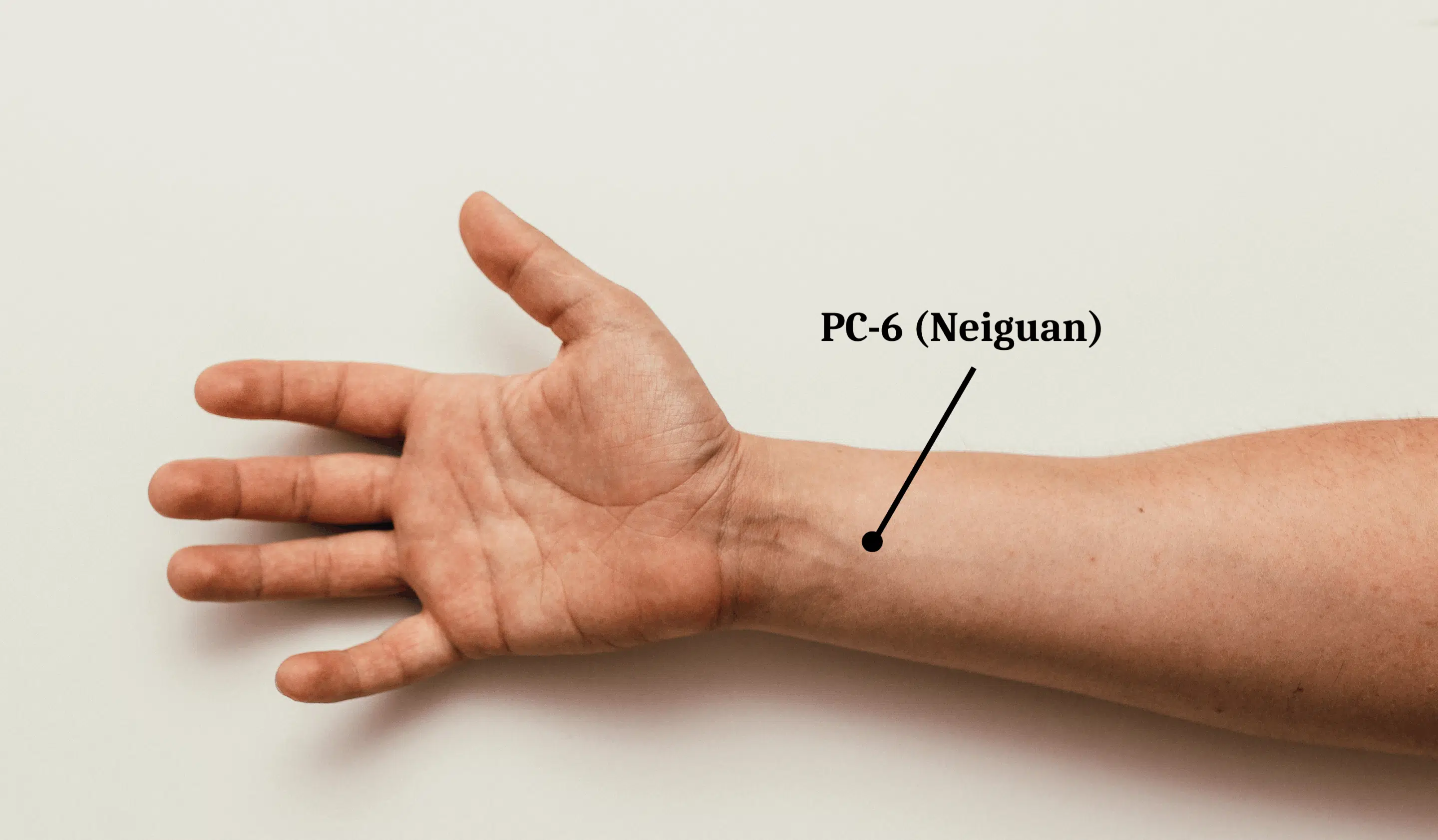
The PC6 point (Neiguan, on the inner wrist) is the most studied acupoint for nausea. A 2022 study found that acupressure on PC6, in conjunction with anti-nausea medication, was more effective at relieving nausea and vomiting than medication alone in breast cancer patients undergoing chemotherapy .
Another study of 90 women found that acupressure administered for 10 minutes four times a day reduced the severity of nausea, vomiting, and retching during pregnancy .
A 2024 review laid out the positive effects of acupressure on people with gastrointestinal disorders, noting benefits for issues like constipation, gas, or bloating .
What this means for you: If you experience nausea from pregnancy, chemotherapy, or motion sickness, acupressure on the PC6 point (three finger-widths below your palm on the inner wrist) is a safe, free, and effective tool to try.
5. Cognitive Function in Older Adults
What the research shows: Acupressure may improve cognitive function and mood in older adults with cognitive impairment.
The 2025 meta-analysis of 15 RCTs including 1,149 older adults found that acupressure significantly improved cognition (mean difference = 2.36, 95% confidence interval = 1.71 to 3.00, P < 0.001) and reduced agitation (MD = -1.51) .
What this means for you: For older adults experiencing mild cognitive impairment, acupressure may be a helpful non-invasive intervention to support cognitive function and mood. However, more research is needed.
6. Fatigue in Cancer Patients
What the research shows: Acupressure reduces cancer-related fatigue.
A 2022 study found that both SI-TEAS (a form of electrical acupoint stimulation) and acupressure significantly reduced cancer-related fatigue compared to sham treatment. The acupressure group showed reductions in behavioral, sensory, emotional, and cognitive dimensions of fatigue .
What this means for you: If you are undergoing cancer treatment and experiencing fatigue, self-administered acupressure may help. It is safe, non-invasive, and can be done at home.
7. Immune Function
What the research shows: Acupressure may improve cell immunity.
The same 2022 study found that the acupressure group had increased absolute counts of CD3+ T cells, CD4+ T cells, CD8+ T cells, and NK cells—all markers of immune function .
What this means for you: This evidence is preliminary. More research is needed before acupressure can be recommended specifically for immune support.
8. Allergy and Sinus Relief
What the research shows: Acupressure may help with sinus pressure and nasal congestion.
The LI20 point (at the sides of the nose) is used to clear nasal congestion and reduce sinus pressure. Licensed acupuncturist Megan Scott notes that "locally stimulating these points can allow for decongestion, decreased pain and support healthy eyes and nasal passages" .
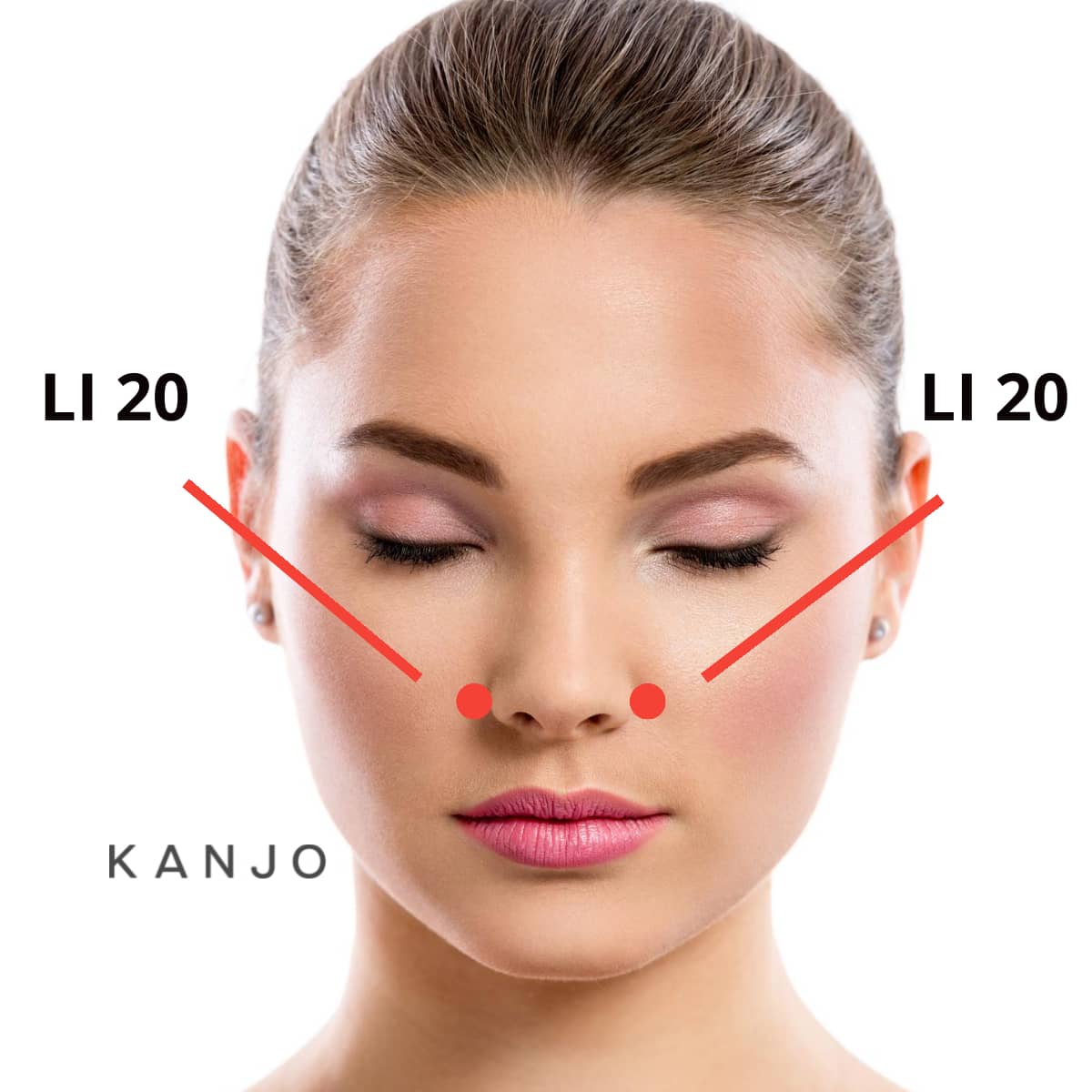
What this means for you: Pressing on the LI20 points (the small indentation where the nose meets the cheek) for 1-2 minutes may help relieve sinus pressure and nasal congestion. The evidence is primarily clinical experience rather than large trials.
BENEFITS WITH TRADITIONAL SUPPORT BUT LIMITED SCIENTIFIC EVIDENCE
The following benefits are claimed by traditional Chinese medicine and reported anecdotally but have limited or inconsistent scientific support.
1. "Enhanced Spiritual Awareness" and "Emotional Blockage Release"
The claim: Acupressure can be used as a tool for spiritual growth and enlightenment, as it works on the subtle energy pathways of the body known as meridians. It can help release "emotional blockages" and promote spiritual awareness.
What science says: There is no scientific evidence that acupressure releases "emotional blockages" in the traditional sense. However, acupressure does reduce stress, anxiety, and depression—which can certainly make a person feel more spiritually connected and emotionally balanced. The "emotional release" some people experience during acupressure is likely due to nervous system relaxation, not the movement of "qi" .
The honest take: If acupressure helps you feel calmer and more connected, that benefit is real—but the mechanism is neurological, not mystical. The feeling of "emotional release" is genuine; the explanation of "blocked meridians" is a traditional metaphor, not a scientific fact.
2. "Improved Blood Circulation"
The claim: Acupressure improves blood flow and circulation throughout the body.
What science says: There is some evidence that pressure on acupoints can cause local vasodilation (widening of blood vessels) and increase blood flow to the stimulated area. However, claims that acupressure significantly improves systemic circulation are not well-supported by research. Exercise, hydration, and a healthy diet are far more effective for circulation .
The honest take: Acupressure may increase local blood flow at the point of pressure—similar to any massage. It is not a treatment for poor circulation.
3. "Enhanced Immune Function"
The claim: Acupressure boosts the immune system, helping to protect the body against illness and disease.
What science says: There is limited evidence that acupressure may affect immune markers. The 2022 study on cancer-related fatigue found that acupressure was associated with increased counts of certain immune cells (CD3+, CD4+, CD8+, NK cells) . However, whether this translates to clinically meaningful immune protection (fewer infections, faster recovery) has not been established.
The honest take: This is a promising area of research, but current evidence is insufficient to claim that acupressure "boosts immunity" in a clinically meaningful way.
4. Treatment for "Disease" Beyond Symptom Management
The claim: Acupressure can treat a wide range of diseases by balancing the body's energy.
What science says: The evidence supports acupressure for symptom management—pain, nausea, stress, sleep—not for treating underlying diseases. Acupressure does not cure cancer, diabetes, heart disease, or infections. It may help manage symptoms associated with these conditions, but it is not a substitute for medical treatment .
The honest take: Use acupressure as a complementary tool for symptom relief, not as a primary treatment for disease.
THE KEY PRESSURE POINTS AND HOW TO USE THEM

LI4 (Hegu) — Between Thumb and Index Finger
Location: In the webbing between your thumb and index finger, at the highest point of the muscle when the thumb is brought next to the index finger .
Traditional uses: Pain relief, headaches, immune support.
Scientific support: Effective for pain, including labor pain .
How to apply: Use your thumb and index finger of the opposite hand to press firmly into the webbing. Hold for 1-2 minutes. You should feel a dull ache but not pain .
Contraindication: Do not use during pregnancy—this point is traditionally believed to stimulate uterine contractions.
PC6 (Neiguan) — Inner Wrist
Location: On the inner forearm, approximately three finger-widths below the base of your palm, between the two tendons .
Traditional uses: Nausea, anxiety, calming the mind.
Scientific support: Strong evidence for nausea relief (pregnancy, chemotherapy, motion sickness). Also effective for anxiety and sleep .
How to apply: Use your thumb to press into the point on your opposite wrist. Hold for 1-2 minutes. Can be used on both wrists.
SP6 (Sanyinjiao) — Inner Leg, Above Ankle
Location: On the inner leg, approximately four finger-widths above the ankle bone, just behind the shinbone .
Traditional uses: Women's health, digestive issues, labor.
Scientific support: Effective for labor pain .
How to apply: Use your thumb to press into the point. Hold for 1-2 minutes.
Contraindication: Do not use during early pregnancy.
LI20 (Yingxiang) — Sides of the Nose
Location: At the sides of the nose, in the small indentation where the nose meets the cheek .
Traditional uses: Sinus pressure, nasal congestion, allergies.
Scientific support: Clinical experience supports use for decongestion; limited large-scale trials.
How to apply: Use your index fingers to press gently on both sides of the nose simultaneously. Hold for 1-2 minutes. Repeat 2-3 times when experiencing congestion .

Ren 17 (Shanzhong) — Center of Chest
Location: In the middle of your chest, at the level of your nipples, right on your breastbone (sternum) .
Traditional uses: Calming emotions, relieving stress, reducing anxiety.
Scientific support: Limited direct evidence; related to stress reduction benefits.
How to apply: Place two or three fingers on the point. Apply gentle but firm pressure. Hold for 1-2 minutes while breathing slowly .
Kidney 1 (Yongquan) — Sole of Foot
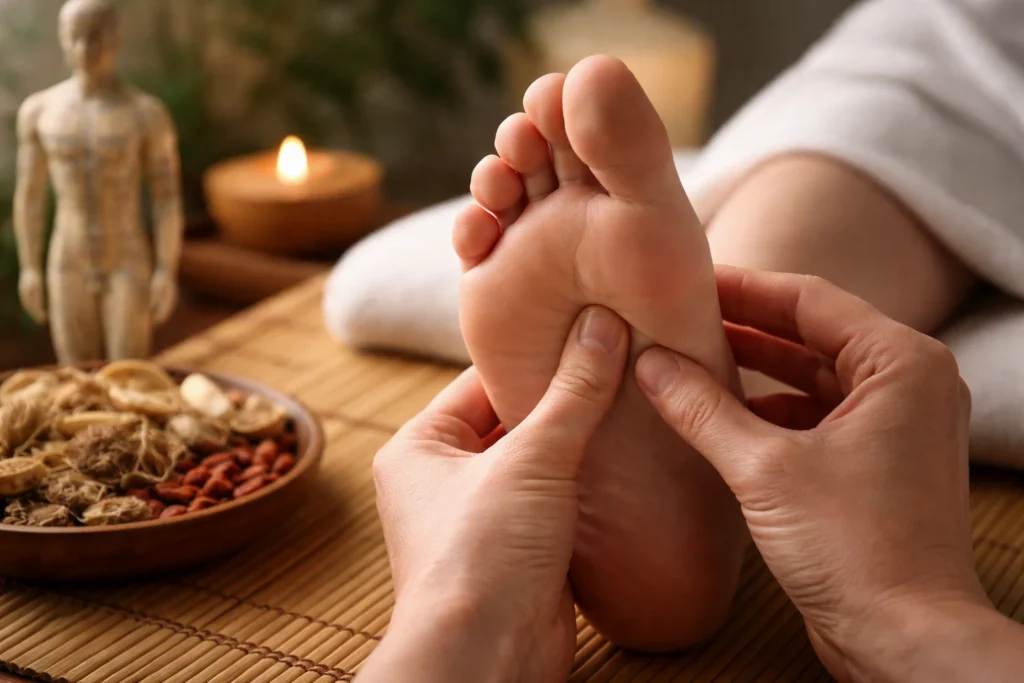
Location: On the sole of the foot, just under the ball of the foot, in the depression that appears when you curl your toes .
Traditional uses: Grounding, calming, improving sleep.
Scientific support: Related to stress reduction and sleep benefits.
How to apply: Use your thumb to press firmly into the point. Hold for 1-2 minutes. Can be done on both feet .
SAFETY AND PRECAUTIONS
Acupressure is generally safe when performed correctly .
Do not press so hard that you bruise or feel pain beyond a dull ache. "You should never press so hard that you would bruise yourself," warns licensed acupuncturist Megan Scott. "You may notice a mild ache, which can help you find that point, but you should never hold pressure to the point of discomfort or pain" .
Avoid acupressure on areas with: Cuts, bruises, burns, infections, varicose veins, or skin conditions .
Use caution or avoid during pregnancy: Certain points (LI4 and SP6) are traditionally believed to stimulate uterine contractions. Consult a qualified practitioner before using acupressure during pregnancy .
Possible side effects: Soreness and tenderness at the point, dizziness, emotional release, and in rare instances, nausea, hypotension (low blood pressure), palpitations, or headache .
When to stop: If you feel worse after acupressure, discontinue and consult a licensed professional .
Acupressure is complementary, not替代. It should not replace medical treatment for serious conditions. Use it alongside, not instead of, professional medical care .
Acupressure has been used for 5,000 years. Modern science has confirmed that it works for several conditions—pain, nausea, anxiety, depression, and sleep. The evidence is strongest for nausea (PC6 point) and pain (including labor pain and cancer pain).
But not every traditional claim is scientifically supported. There is no evidence that acupressure treats underlying diseases, significantly improves systemic circulation, or works through "qi" and "meridians" as traditionally described.
The benefits are real. The mechanism is neurological. Pressing points stimulates nerves, releases endorphins, activates the parasympathetic nervous system, and modulates pain pathways. This is not "less than" the traditional explanation—it is simply a different language for the same observed effects.
Acupressure is safe, free, and can be self-administered. It is an excellent complementary tool for managing symptoms. It is not a replacement for medical care.
The points are easy to learn. You can start today with PC6 for nausea or Ren 17 for anxiety. A few minutes of pressure may change how you feel.
What part of your body will you press today?
Sources cited:
· Zhang et al. (2025). Acupressure for older people with cognitive impairment: systematic review and meta-analysis. Frontiers in Psychiatry.
· Cleveland Clinic. What Is Acupressure and Does It Work? (2025).
· Invasive or noninvasive? Systematic review and network meta-analysis of acupuncture and acupressure to treat cancer pain. Supportive Care in Cancer (2025).
· Effects of Auricular Acupressure Therapy on Psychological Factors, Sleep Quality, and Salivary Cortisol Levels. Journal of Korean Academy of Fundamentals of Nursing (2023).
· SI-TEAS intervention eases cancer-related fatigue, improves cell immunity. MIMS (2022).
· Influence of acupuncture and acupressure on labor duration: a systematic review. J. Health Biol. Sci. (2024).
· The Benefits and Basics of Acupressure: A Comprehensive Guide. Everyday Health (2023).
· Unveiling the latest evidence: updated systematic review and meta-analysis on acupressure for managing labor pain. BMC Complementary Medicine and Therapies (2025).









Collective Insights
Be the First to Share
Your insights could spark meaningful conversations. Share your thoughts above!
Share Your Insight