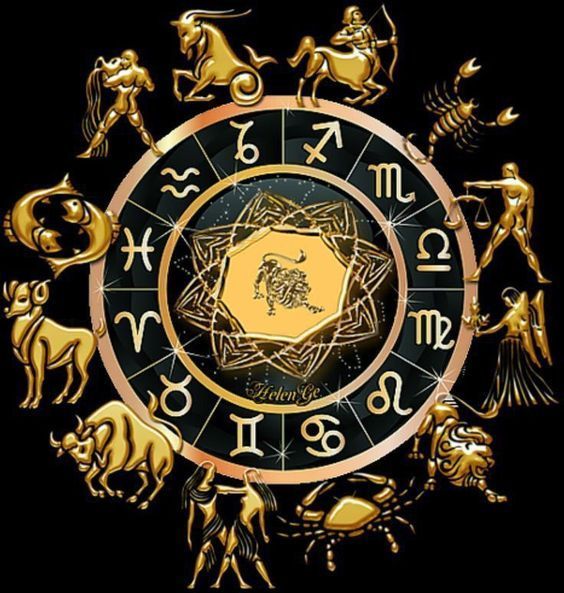
Why Your Zodiac Sign Doesn’t Define You: The Science of Personality vs. Astrology
Let's be real with each other.
You've read your horoscope. Maybe you felt a chill when it said Leos are natural-born leaders—and you're a Leo who leads. Or you laughed when it said Virgos are perfectionists, and you're a Virgo who color-codes your bookshelf.
But then you met a Leo who couldn't lead a horse to water. A Virgo whose room looks like a tornado hit it. A Pisces with zero creativity. A Capricorn who's impulsive and reckless.
And you started wondering: Is this whole thing just... made up?
The answer is yes. Plain and simple.
Your zodiac sign does not determine your personality. It never has. It never will.
Here's the evidence, the science, and the plain truth about what actually makes you who you are.
WHAT THE SCIENCE ACTUALLY SAYS
Multiple large-scale scientific studies have tested whether zodiac signs predict anything about human personality. The results are unanimous:
Study 1: 65,268 People, Zero Correlation
A 2017 study published in The International Journal of Science in Society analyzed personality data from over 65,000 people . Researchers compared individuals born under different zodiac signs across the "Big Five" personality traits—openness, conscientiousness, extraversion, agreeableness, and neuroticism.
The finding? No statistical similarities among people who shared the same star sign. Being a Virgo didn't mean you shared traits with other Virgos. Libras weren't distinct from Virgos, Pisces, or Capricorns. The researcher concluded: "This affirms, through scientific investigation, that astrology should be seen for what it is—an outmoded, archaic belief system based on mythological assumptions."
Study 2: 12,791 Americans, Zero Predictive Power
A 2024 study published in the journal Kyklos examined the relationship between zodiac signs and well-being using a nationally representative American sample of 12,791 people . Researchers measured eight components of well-being: happiness, depressive symptoms, psychological distress, work satisfaction, financial satisfaction, life satisfaction, health, and marriage satisfaction.
The result? No robust associations between zodiac signs and any of these variables. The effect sizes were so small they accounted for less than 0.3% of the variance. Here's the kicker: researchers ran an additional analysis and found that a randomly generated number between 1 and 12 was statistically as predictive of someone's well-being as their zodiac sign.
That's not opinion. That's data.
Study 3: University of Padua Thesis Review
A 2022 thesis from the University of Padua reviewed current evidence on astrology's ability to predict personality traits . The conclusion: "Most of the examined studies indicated no convincing scientific evidence on astrology's ability to accurately predict individuals' personality traits based on their zodiac sign."
WHY ASTROLOGY FEELS TRUE (The Psychology of Deception)
If astrology doesn't work, why do millions of people swear by it? Three psychological phenomena explain it completely:
1. The Barnum Effect (It's About You, Specifically—Except It's About Everyone)
In 1948, psychologist Bertram Forer gave his students a personality test. A week later, he returned with "individualized" results. Students rated the accuracy on a scale of 0 to 5. The average score was 4.26—meaning they felt the analysis described them perfectly .
Here's the catch: every single student received the exact same paragraph. Forer had copied it from a newsstand astrology book.
The paragraph included statements like:
"You have a great need for other people to like and admire you. You have a tendency to be critical of yourself. You have a great deal of unused capacity which you have not turned to your advantage. Disciplined and self-controlled outside, you tend to be worrisome and insecure inside."
Sound familiar? That's because these statements are vague, general, and apply to almost everyone . The Barnum Effect explains why horoscopes feel personal—they're written broadly enough that anyone can project themselves onto the words.
2. Confirmation Bias (You Remember the Hits, Forget the Misses)
Your brain is wired to notice when things match your expectations and ignore when they don't .
When your horoscope says "You'll meet someone interesting today" and you happen to have a good conversation with a stranger, you remember. The other 364 days when nothing happened? Forgotten.
When your sign says Leos are confident, you notice every moment you feel confident. You ignore the moments of crippling self-doubt—because they don't fit the narrative.
3. The Self-Fulfilling Prophecy (You Become What You're Told You Are)
Psychologist Robert Rosenthal demonstrated that when teachers are told certain students are "academic bloomers," those students actually perform better—even though the labels were assigned randomly . The teachers' expectations shaped their behavior, which shaped the students' outcomes.
Similarly, if you're told from childhood that "Leos are natural leaders," you may unconsciously adopt leadership behaviors. Not because the stars aligned—but because you were programmed to align with the expectation .
As one university psychology article put it: "If you're a very狂热 astrology enthusiast and从小 believe that 'Sagittarius loves freedom' and 'Virgo has perfectionism,' you may unconsciously be influenced by such suggestions and become这样的人."
If someone is born under a sign that says they do well in sports, but the individual because of genetics is born short—can the zodiac sign make them the best at basketball? Well, the individual may still be the best despite being short by practice and determination, but that would be a very slim chance because taller players with the same skill can outwit them.
Imagine two children born on the exact same day, at the exact same time, in the exact same hospital. Same sun sign. Same moon sign. Same rising sign. Same everything, astrologically speaking.
Now imagine one child grows up in a home where both parents are 6'5", played college basketball, and the child has the ACTN3 gene variant associated with power performance . The other child grows up in a home with parents averaging 5'4", lacks the power-related gene variants, and has a different COMT gene affecting dopamine regulation and risk-taking.
Which child is more likely to become a professional basketball player?
The answer is obvious. Genetics, environment, upbringing, opportunity, nutrition, coaching, practice—hundreds of real factors determine the outcome. Not the position of the sun on the day they were born.
Research on athletic performance confirms this. Studies of English academy football players found that genetic variants explained between 6% and 33% of the variance in power-oriented performance . Another study showed that individual differences in response to resistance training ranged from -35.90% to 125.71% —and these differences were partially explained by specific genetic markers .
The stars had nothing to do with it.
WHAT ACTUALLY SHAPES YOUR PERSONALITY (The Real Science)
If not the stars, then what? Here's what decades of behavioral genetics research have established:
1. Genetics: About 40-50%
Twin studies consistently estimate that heritability accounts for about 40-50% of personality traits . This doesn't mean there's a "Leo gene" or a "Virgo gene." It means personality is influenced by thousands of genetic variants scattered across nearly all chromosomes, each contributing a tiny effect .
Genome-wide association studies have identified specific variants involved in biological pathways like neurogenesis and neuronal differentiation . These influence traits like neuroticism, extraversion, and openness—but not according to your birthday.
2. Non-Shared Environment: About 50-60%
The remaining variation comes from the non-shared environment—the unique experiences, relationships, and events that shape each person differently . This includes:
· Parenting style and childhood experiences
· Education and peer influences
· Traumatic events or major life changes
· Cultural context and opportunities
· Random life circumstances
These environmental factors influence personality through epigenetic changes—modifications that affect how genes are expressed without changing the DNA sequence itself . Your experiences literally "write" themselves onto your biology.
3. Brain Chemistry and Neural Wiring
Your brain's structure and function are the immediate physical basis of your personality. Neurotransmitter systems—dopamine, serotonin, norepinephrine—regulate mood, motivation, and behavior. Variations in the genes controlling these systems contribute to individual differences in traits like impulsivity, reward-seeking, and emotional stability.
This is why two people can face the same situation and respond completely differently. Their neural hardware is configured differently.
THE BOTTOM LINE (No Sugarcoating)
Astrology is not real.
Not "not real in a spiritual sense." Not "not real in a way we can't measure." Not real. As in: tested, measured, analyzed, and found to have zero predictive power beyond random chance.
The University of Padua thesis put it plainly: astrology is a "paranormal determinism" that has been associated with prejudice and harmful stereotypes . When you tell a child "Virgos are perfectionists" or "Leos are arrogant," you're not describing them. You're limiting them.
You're handing them a box and telling them to stay inside.
Your personality is not written in the stars. It's written in your genes, shaped by your experiences, expressed through your brain chemistry, and ultimately—chosen by your actions.
That Leo who can't lead? He might have different genetic variants affecting his dopamine system, making him less reward-driven than other Leos. He might have grown up with critical parents who crushed his confidence. He might have developed different coping mechanisms that don't fit the "confident leader" mold.
And that's fine. Because he gets to become whoever he actually is—not whoever the stars supposedly decided he should be.
The research on heredity and personality makes one thing clear: you are not predetermined by the date of your birth. You are a complex, unique product of thousands of genetic variants, countless environmental influences, and your own conscious choices.
WHAT THIS MEANS FOR YOU
If you've been using astrology to understand yourself, here's the liberating truth:
You are not limited to your sign's description.
A "practical Capricorn" can pursue art. A "dreamy Pisces" can start a business. An "aggressive Aries" can cultivate gentleness. A "stubborn Taurus" can learn flexibility.
The research shows that personality is dimensional, not categorical . You're not one of 12 boxes. You're a unique combination of traits that exist on continuous spectrums—spectrums shaped by real biology and real experience, not ancient mythology.
Your freedom begins the moment you stop looking for yourself in the stars and start building yourself on the ground.
THE FINAL WORD
I'm not asking you to stop finding entertainment in horoscopes. Read them for fun. Share them with friends. Laugh when they're hilariously wrong.
But don't outsource your identity to them.
Don't let a 2,000-year-old system with zero scientific validity tell you who you can become. Don't let vague, general statements masquerade as insight into your unique soul.
You are not your sign. You are your actions. Your choices. Your growth. Your values. Your relationships. Your work. Your love.
That's what shapes who you are. That's what determines who you'll become.
Not the stars.
You.
FAQs
Q: Is there any scientific proof that zodiac signs are real?
A: No. Large-scale studies with tens of thousands of participants have found zero correlation between birth dates and personality traits .
Q: Why does my horoscope seem so accurate?
A: This is due to the Barnum Effect. Horoscopes use vague, positive statements that apply to the majority of people. You are projecting your own life story onto generic text .
Q: Can the moon sign affect my mood?
A: While the moon affects the tides, there is no scientific mechanism by which it could affect human mood or psychology at the moment of birth. Studies on moon phases and behavior (like crime or hospital admissions) have failed to find reliable correlations .
Q: What actually shapes my personality?
A: Your personality is shaped by genetics (heredity), childhood experiences, social environment, culture, and personal life choices.
What's one "astrology stereotype" you've been carrying that you're ready to drop?


Collective Insights
Be the First to Share
Your insights could spark meaningful conversations. Share your thoughts above!
Share Your Insight