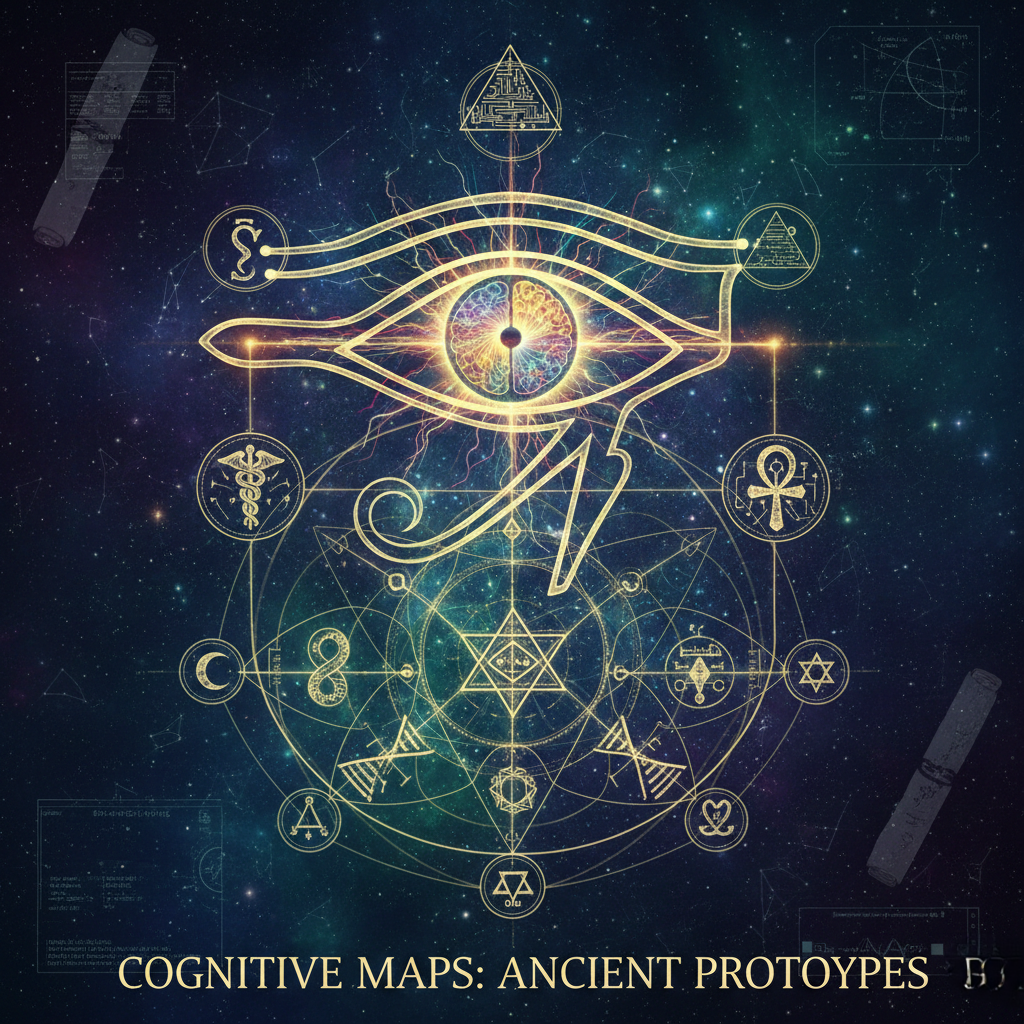
The Greatest Lie Ever Sold: Your "Magic" is Just Your Brain in Disguise
You've been lied to about occult power. Real magic isn't supernatural—it's a 5,000-year-old operating system for consciousness. Here’s the cognitive science behind the symbols.
Introduction: The Uncomfortable Awakening
Let’s begin with a truth that will anger practitioners and mystify skeptics:
There is no such thing as magic.
Not in the way you’ve been taught. There are no spells that bend physical reality, no incantations that summon external entities, no rituals that manipulate a supernatural world. The grimoires, the sigils, the invocations—they were never meant to control the cosmos. They were meant to control you.
For centuries, the occult has been misunderstood as a study of external forces. It is, in fact, humanity’s most sophisticated pre-scientific study of internal forces—a meticulous, symbolic map of consciousness itself. What we call "magic" is the observable effect of reprogramming the human bio-computer using ritual, symbol, and belief as the coding language.
This isn’t a dismissal. It’s a promotion. Realizing that occultism is cognitive technology—not supernatural fantasy—is the key to unlocking its actual, formidable power. The ancients weren’t primitive; they were pioneering psychologists who discovered how to hack the human operating system long before we had the words "neuroplasticity" or "predictive processing."
Historical Origins: From Temple Ritual to Psychological Manual
The occult, at its root, is not fringe. It is the mainstream esoteric core of almost every major religious and philosophical tradition, stripped of its exoteric (public-facing) mythology.
The Ancient Prototypes: Egypt, Babylon, and Greece
In the temple schools of Egypt, initiates weren’t learning to command gods. They were undergoing structured psychodramas. The journey through the Duat (the underworld) wasn’t a geography lesson for the dead; it was a guided visualization for the living—a symbolic ordeal designed to collapse the initiate’s ego and reforge their identity. The gods (Netjeru) represented archetypal forces of nature and psyche: Isis as the nurturing subconscious, Set as chaotic disruption, Thoth as the intellect and word.
The Babylonian exorcists and Greek mystery schools (like Eleusis) operated on the same principle. Secrecy wasn’t to hide "power" from the masses; it was to protect the integrity of the psychological experiment. Telling an initiate exactly what to expect would ruin the placebo effect—the expectancy-triggered neurochemical cascade that made the initiation transformative.
The Medieval Pivot: Grimoires as Code
By the Middle Ages, this inner science had been driven underground by dogmatic religion. What emerged were the grimoires—like The Key of Solomon or The Lesser Key of Solomon (the Lemegeton). On the surface, they are manuals for conjuring demons. To the cognitive historian, they are elaborate behavioral scripts for inducing altered states.
The magic circle isn’t for protection from spirits. It’s a psychological containment field, defining sacred space to focus attention and limit sensory input, forcing the brain into a mono-tropic (single-focused) state. The barbarous names of evocation aren’t a celestial language; they are phonetic placeholders without semantic meaning, designed to bypass the analytical mind and speak directly to the associative, pattern-seeking subconscious.
The "demons" of the Goetia, like Bael or Paimon, are not external entities. They are catalogued states of consciousness, drives, and psychological complexes (e.g., Bael for invisibility/withdrawal, Paimon for artistic inspiration/obedience). To "conjure" them is to ritually activate these latent parts of the self, giving them form and dialogue to integrate or command them.
Symbolism and Hidden Meaning: The Universal Interface Language
Occult symbolism is not arbitrary. It is a cross-cultural, trans-historical user interface for the human mind, built on our shared neuroarchitecture.
Why Symbols Work: The Brain’s Native Tongue
Your conscious, verbal mind (primarily the prefrontal cortex) is slow, sequential, and logical. Your subconscious (the limbic system, basal ganglia, and much of the right hemisphere) is fast, parallel, and processes in images, patterns, and emotions.
A spoken affirmation like "I am confident" is processed by the critical conscious mind, which often argues: "Are you, though?" A symbol—like wearing a lion’s medallion or visualizing a sun at your solar plexus—slips past this gatekeeper. The subconscious doesn’t debate symbols; it embodies their associative meaning. The lion is confidence. The sun is vitality. This is the mechanism behind effective sigil magic: reducing a desire to an abstract glyph the conscious mind forgets, allowing the subconscious to enact it.
The Real Reason for Secrecy
The oath of secrecy in occult orders served multiple technological purposes:
- Cognitive Defense: It prevented the symbolic system from being "explained away" by literalists, which would rob it of its power to bypass logic.
- Social Bonding: It created intense in-group cohesion and identity, triggering neurochemical rewards (oxytocin, dopamine) that reinforced commitment.
- Information Fidelity: It acted as a quality control mechanism, ensuring teachings were passed through direct experience (initiation) rather than intellectual understanding alone, preserving the transformative process.
Consciousness / Psychology Explanation: The "Magic" in the Machine
Every reported magical phenomenon has a correlate in cognitive science. The shift is from "How does this affect the world?" to "How does this affect the perceiver’s model of the world?"
The Predictive Brain: You Live in a Simulation
The leading theory in neuroscience is the Bayesian Brain or Predictive Processing. Your brain does not perceive reality directly. It runs a constant, internal simulation of the world based on past experience (priors) and updates it with sensory input. What you experience as "reality" is this simulation.
Ritual magic is a hack of this system. The intense sensory input (incense, chanting, focused visualization), combined with a strong prior of belief ("this ritual will change X"), creates a powerful new prior in the brain’s model. Once the brain accepts a new prior (e.g., "I am a magnet for abundance"), it begins to filter sensory data to confirm it (the Reticular Activating System in action) and guides behavior to fulfill it. The world seems to "magically" align because your perception and actions have been covertly reprogrammed.
Neurophenomenology of Ritual
- Trance States (Theta Brainwaves): Rhythmic chanting, drumming, and repetitive motion induce theta-dominant states, associated with deep creativity, hypnagogia, and subconscious access. This is the "gateway" state for visions and insights.
- Ego Dissolution: Intense ritual, sensory deprivation, or psycho-spiritual exercises can temporarily quiet the Default Mode Network (DMN)—the brain network responsible for your sense of autobiographical self. This creates the profound experience of "oneness" or "possession," interpreted as communion with the divine or a spirit.
- The Placebo/Nocebo Engine: Belief is a potent neurochemical trigger. The belief that a protective talisman guards you (placebo) can lower cortisol (stress hormone) and boost immune response. The belief in a curse (nocebo) can induce psychosomatic illness. This isn't "all in your head" in a dismissive sense; it's all in your body, mediated by your head.
Why It Feels Real: The Self-Fulfilling Prophecy of Belief
The feeling of "real magic" is an inevitable byproduct of the system working as designed.
- Confirmation Bias on Steroids: Once you believe in the symbolic system, any success is attributed to the magic, and any failure is attributed to personal error ("my will wasn’t pure enough"). This creates an unfalsifiable, self-reinforcing learning loop.
- State-Dependent Learning & Memory: Experiences in altered states (ritual trance) are encoded with the emotional and sensory data of that state. Recalling the ritual can trigger a micro-state of the original experience, reinforcing its perceived reality.
- The Synchronicity Illusion: Carl Jung’s concept of synchronicity (meaningful coincidence) is the brain’s pattern-recognition engine, supercharged by a new prior. When you’re primed to see "hawks as messengers," you will notice hawks more often and attach meaning to their appearance. The meaning is real to you; it’s generated by your own reprioritized attention.
Modern Relevance: From Altered States to Algorithmic States
The principles of occult cognitive technology are more relevant than ever, driving fields far beyond spirituality.
Spirituality 3.0: The Quantified Self
Modern mindfulness apps, biofeedback devices (like HeartMath), and psychedelic-assisted therapy are the democratized, sensor-driven evolution of occult practice. They use technology to achieve what rituals did through symbolism: guide the user into specific, beneficial brain states and provide feedback to reinforce the practice.
The Technology of Persuasion
Social media algorithms and advertising are applied mass-scale occultism. They use symbolic imagery (logos, brands), rhythmic notification patterns, and curated feeds to shape user identity, desire, and behavior—creating self-reinforcing filter bubbles not unlike magical circles. The "influencer" is a modern archetype, a parasocial "spirit guide" for consumer identity.
AI and the New Alchemy
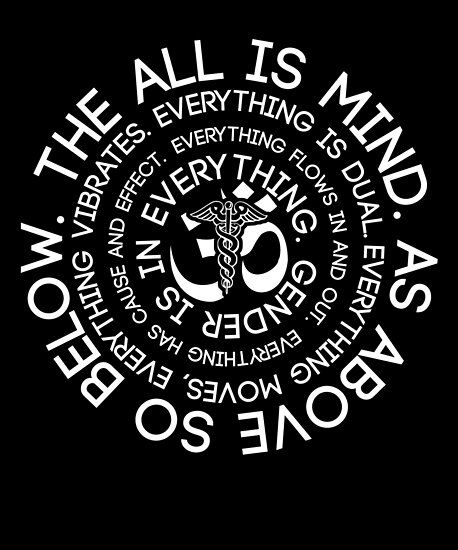
We are now externalizing our cognitive processes. Large Language Models (LLMs) operate on pattern recognition and symbolic association in ways eerily reminiscent of the hermetic "As above, so below." Training an AI on vast corpora of text to generate novel insights is a form of digital theurgy—invoking intelligence from a constructed symbolic universe. The quest for Artificial General Intelligence (AGI) is the ultimate alchemical project: the creation of a homunculus, an embodied mind from base material (data and silicon).
FAQs: Separating Signal from Superstition
Q1: So, are you saying magic isn't real?
A: It depends on your definition. If "real magic" means affecting the physical world in violation of known laws via will alone, then no evidence supports it. If "real magic" means using symbolic systems to create profound, measurable changes in consciousness, perception, behavior, and life outcomes, then it is demonstrably real and incredibly powerful. The latter is what occultism has always been.
Q2: Are spirits, angels, and demons just parts of our psyche?
A: From a consciousness science perspective, yes. They function as psychologically real autonomous complexes within the personal and collective unconscious. Whether they have an independent ontological existence is a philosophical or theological question. The pragmatic occultist treats them as such because engaging with them as if they are independent produces the intended psychological result: integration, insight, or personal transformation.
Q3: Is occult practice dangerous?
A: Absolutely, but not for the reasons in horror movies. The danger is psychological. Intense ritual and belief can:
- Trigger latent psychological disorders (psychosis, schizophrenia).
- Reinforce delusional thinking if divorced from critical reflection.
- Create social isolation and dependency on a group or leader.
- Like any powerful technology (a car, a programming language), it is dangerous in ignorant or malicious hands and transformative in skilled, ethical ones.
Q4: Can science fully explain every occult experience?
A: Not yet, and perhaps not ever in a reductive sense. Science excels at explaining the mechanisms (brain states, psychological principles). It struggles with the qualia—the first-person, subjective experience of meaning, sacredness, and connection. This gap isn't a flaw in science; it's the boundary between the map (science) and the territory (conscious experience). Occultism provides a map for navigating the territory directly.
Q5: Why do some rituals "work" for some people and not others?
A: For the same reason a specific medication or therapy works for some and not others: individual neurobiological and psychological differences. Key factors include:
- Absorption: The innate trait of becoming deeply immersed in mental imagery.
- Expectancy: The strength of prior belief in the system.
- Sensitivity: Variations in sensory processing and limbic system reactivity.
- Skill: Practice and understanding of the symbolic "language" being used.
Q6: Does this mean all religious experience is just brain chemistry?
A: It means all religious experience is mediated by brain chemistry. This does not negate its potential truth or value. All human experience—love, awe, justice—is mediated by brain chemistry. The neurological correlate of an experience tells us about its mechanism, not its meaning or ultimate cause.
Q7: How can I use this knowledge practically?
A: Approach any spiritual or occult practice with this lens:
- Identify the Target: What internal state or behavioral trait is this practice designed to cultivate? (e.g., calm, focus, confidence).
- Analyze the Method: What sensory, cognitive, or social tools does it use? (rhythm, symbol, community belief).
- Test Ethically: Implement it consciously, observe the effects on your mindset and life, and adapt or abandon it based on results, not dogma.
Conclusion: Put Down the Wand and Pick Up the Manual
The romantic age of occultism is over. The age of its genuine utility is just beginning.
We must retire the childish fantasy of wizards commanding the elements and embrace the mature, staggering truth: For millennia, adepts have been reverse-engineering the source code of human experience. They used the best tools they had: myth, ritual, and symbol. We now have new tools: fMRI, EEG, and a rigorous science of mind.
This is not a reduction. It is an unveiling.
The magic was never in the wand, the candle, or the incantation. The magic was in you—in the blind, generative potency of your own consciousness to reshape itself and, in doing so, reshape the world it perceives. The occult tradition is the scattered, encrypted manual for that process.
The final initiation is this realization: You are not a mortal seeking magic. You are a conscious system that is magic, learning to read its own operating instructions. The true Great Work was never the transformation of lead into gold. It is the transformation of ignorance into operational knowledge—the moment you stop praying to the simulation and start studying the code.
The temple is the mind. The altar is attention. The only true invocation is the command: Know Thyself.
Collective Insights
Be the First to Share
Your insights could spark meaningful conversations. Share your thoughts above!
Share Your Insight