Grimoires Are Hacker Manuals. Religious Texts Are Approved Operating Systems. Guess Which One They Want You Using.
Grimoires and religious texts aren’t both “holy books.” One is a blueprint for personal sovereignty. The other is a manual for social control. Here’s how to tell the difference—and why it matters for your mind.
Introduction: The Bookshelf of Power
Imagine two books on a shelf.
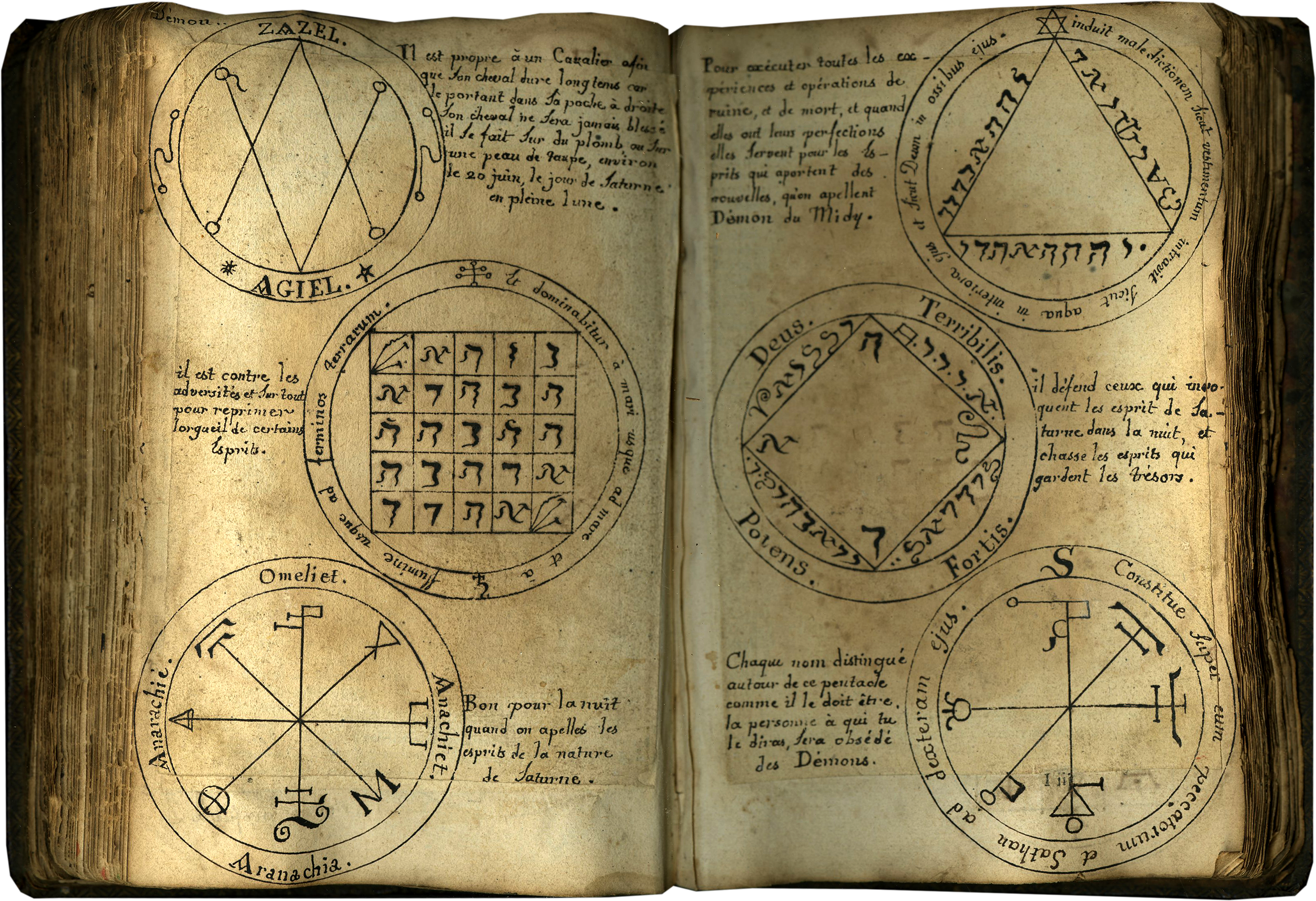
One is bound in gold, distributed by an institution to millions, its words recited in grand buildings by authorities in robes. The other is handwritten, stained with candle wax, passed secretly between individuals, its diagrams said to summon forces that the institution calls demons.
Society tells you one is sacred, the other is dangerous.
But what if we have it exactly backwards?
What if the “sacred” text is a manual for mass psychological control, and the “dangerous” grimoire is a survivor’s guide to personal cognitive liberation?
This isn't about belief in God or magic. It's about instrumentality. A text is a tool. The real question is: Who does the tool serve? Does it empower the institution, or the individual? Does it open a door, or build a wall?
The split between grimoires and religious texts is the oldest war in the human mind: the war between direct experience and delegated authority.
Historical Origins: The Great Fork in the Road
To understand the split, you must see the common root. Both emerged from humanity's burning need to explain the unseen, to influence fate, to communicate with the more-than-human.
Religious Texts: The Consolidation of Consensus Reality
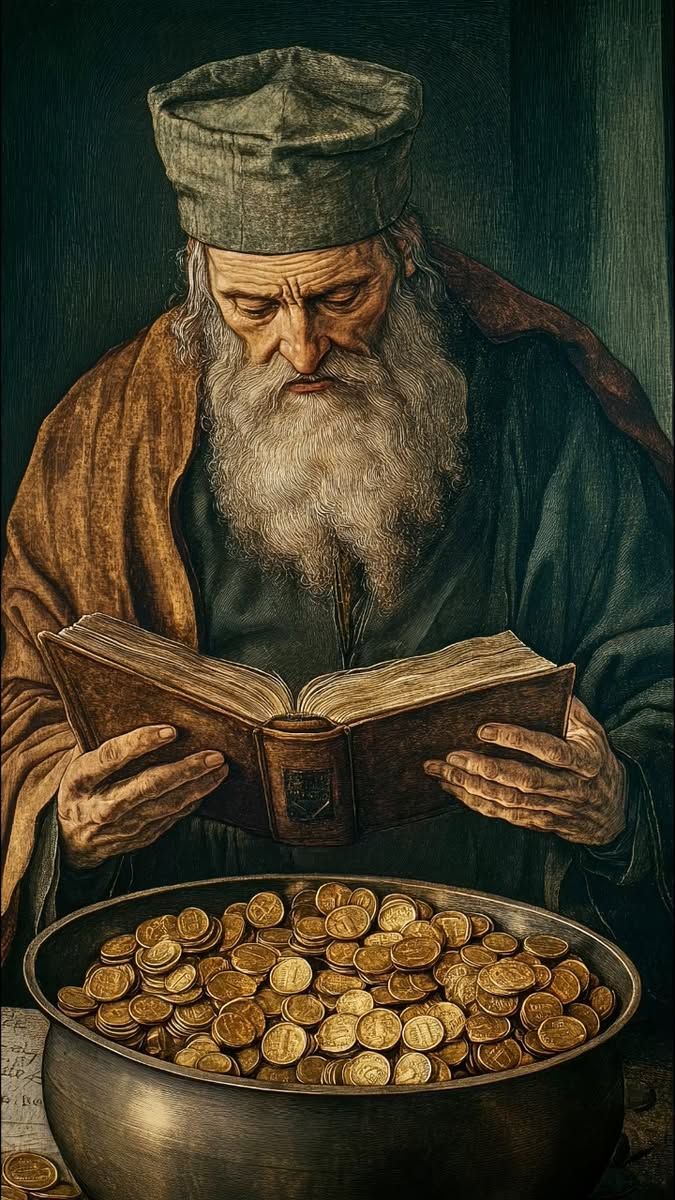
The Bible, the Quran, the Vedas—these did not fall from heaven fully formed. They are the victorious edit.
They are compilations, often codified centuries after the events they describe, by councils, scholars, and emperors with a political need for a unified narrative. The Council of Nicaea (325 CE) didn't just debate theology; it standardized doctrine to unify the Roman Empire. The Vedic canon was solidified by priestly classes (Brahmins) to codify social hierarchy (the caste system).
These texts became “scripture” when they were formally adopted by a power structure—a state, a state-backed church, a dominant social class. Their authority is retroactive and institutional. Their primary function shifted from personal revelation to social regulation. They answer: What must we all believe to keep order?
Grimoires: The Exile of the Operators
While emperors and bishops were building orthodoxies, a parallel stream persisted: the operative magic tradition.
The grimoires—the Picatrix, the Key of Solomon, the Sworn Book of Honorius—are the leak, the backup, the offline copy of techniques that predate and often contradict institutional religion. They are folk in the truest sense: not “unsophisticated,” but belonging to the people outside the palace and the cathedral.
Their history is one of persecution. The very label “grimoire” (from grammaire, implying a book of forbidden knowledge) is a smear. They were driven underground not because they were “evil,” but because they were subversive. They claimed an individual, without priestly ordination, could directly interface with divine (or daemonic) forces. This was a threat to the spiritual monopoly—the single greatest source of institutional power in the ancient and medieval world.
The grimoire author wasn't a prophet building a church. He was a technician preserving a hack.

Symbolism and Hidden Meaning: The Language of Access vs. The Language of Obedience
The difference is encoded in the very structure and symbolism of the texts.
Religious Text Symbolism: The Vertical Ladder
Religious scripture is built on vertical symbolism: Heaven above, Earth below. God on the throne, humanity below. Prophet/Messiah as the sole, unique conduit.
The message is mediation. You cannot reach the divine alone. You need the institution, its priests, its sacraments, its approved interpretation. The symbolism creates a dependency architecture. The text itself is often presented as the final, complete, and exclusive word, forbidding addition or alteration (e.g., the warnings at the end of Revelation). Its hidden meaning is often accessible only to a scholarly or priestly class who can read the original languages and context, creating a knowledge hierarchy.

Grimoire Symbolism: The Networked Circle
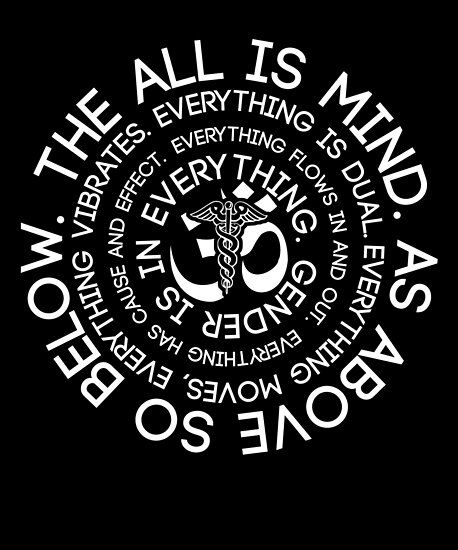
Grimoires are built on horizontal and circular symbolism: the magic circle, the compass points, the sigil, the planetary seals.
The message is direct access. The operator stands at the center. The forces (angels, demons, planetary intelligences) are arranged around them. The book is not an object of worship; it is a technical manual, a cookbook of consciousness. Its authority is provisional and practical—“This worked for me. Follow these steps.”
The “barbarous names of evocation” are not meant to be understood semantically. They are psycho-acoustic tools—sound patterns to disrupt ordinary thought and shift consciousness. The intricate seals and sigils are visual algorithms, geometric code designed to focus intent and interface with specific aspects of the psyche or, in their own terms, the cosmos. The secrecy (“keep this from the foolish”) isn't about hoarding power; it's a warning label—this is potent tech, misuse it and it will backfire on you.
Consciousness / Psychology Explanation: Outsourcing vs. Internalizing Agency
At the level of cognitive science, this is a battle between two models of the mind's relationship to the unknown.
The Religious Text Model: The Externalized Superego
Religious scripture, when engaged with devotionally, strengthens what Freud called the superego—the internalized voice of authority, law, and “should.” It externalizes moral and existential authority. Prayer in this model is often petitionary: asking an external, parental God to intervene.
Neuroscientifically, this can provide immense comfort. It reduces existential anxiety and cognitive load by offloading responsibility and meaning onto a cosmic parent figure. It creates strong in-group bonding through shared narrative, activating the brain's reward systems for belonging. However, it can also stunt the development of the internal locus of control—the crucial belief that you are the primary agent in your life.
The Grimoire Model: The Exercised Will
The grimoire ritual is a structured exercise in volition and focused attention. It forces the operator into the role of the active cause, not the passive petitioner. Even if one “invokes” an angel, the ritual framework places you as the one who prepares the space, gives the commands, and banishes the forces.
This is a workout for the prefrontal cortex (executive function) and a temporary quieting of the Default Mode Network (the “narrative self”). The intense sensory detail (incense, colors, sounds) and complex procedural steps induce a hypnagogic or flow state (theta brainwaves), a state highly receptive to reprogramming subconscious beliefs. The grimoire doesn't ask you to have faith in something. It gives you a procedure to do something, and the “faith” emerges as a self-generated certainty from enacted competence.
In short: Religious texts often ask you to surrender your will to an external story. Grimoires provide a ritual structure to actively author your own internal story.
Why It Feels Real: The Architecture of Belief Reinforcement
Both systems create powerful, self-validating experiences. The difference is how.
The Religious Feedback Loop: Community & Confirmation
The “realness” of religious experience is massively reinforced by:
- Consensus Trance: When millions of people share a belief framework, it becomes “reality.” Your brain is wired to trust consensus (a survival trait).
- Communal Ritual: Singing, chanting, and praying in unison creates neuro-synchronization in a group, producing powerful feelings of unity and transcendence that are interpreted as divine presence.
- Interpretive Authority: Any doubt or anomalous experience can be explained (“It’s a test from God,” “It’s mysterious wisdom”) by the institutional authority, preserving the framework.
The system is robust because it is externally validated. Your experience is confirmed by the priest, the community, and the ancient, venerated text.
The Grimoire Feedback Loop: Solo Operation & Result
The “realness” of magical operation is reinforced by:
- The Ritual Cocktail: Sensory deprivation/overload, rhythmic action, and focused visualization reliably alter brain states. The operator feels a shift (tingling, visions, a sense of presence) which is taken as evidence of the ritual's efficacy.
- The Placebo/Nocebo of Belief: If you perform an elaborate, centuries-old ritual to be more confident, your belief in the ritual can lower cortisol and increase dopamine in that moment, making you feel more confident. This is taken as the “spell working.”
- Confirmation Bias in a Vacuum: Without a community to correct you, personal synchronicities (e.g., doing a money ritual and then finding a $20 bill) are powerfully self-validating.
The system is fragile but potent because it is internally validated. Its power rests entirely on the subjective experience and perceived results of the solitary operator. This makes it incredibly compelling to the individual and incredibly easy for outsiders to dismiss.
Modern Relevance: The Code is Still Running (You're Living in It)
You are not choosing between a Bible and a Goetia today. You are living inside systems built on their competing blueprints.
The New Religious Texts: Ideological Canon
Modern secular ideologies function with the same architecture as religious texts:
- The Sacred Canon: The works of the foundational thinkers (Marx, certain libertarian philosophers, critical theory texts).
- The Priesthood: The academics, pundits, and influencers who provide the “correct” interpretation.
- Heresy & Excommunication: “Cancellation,” deplatforming, exclusion from the in-group for doctrinal deviation.
- Petitionary Prayer: The demand that the Government or the Collective intervene to solve problems, mirroring the prayer to an external God.
These systems offer meaning, community, and a clear moral map—the same comforts as organized religion, just with a different sacred object at the center.
The New Grimoires: The Personal Tech Stack
The grimoire spirit is alive in:
- The Biohacking & Nootropics Community: Individuals experimenting on their own biology with regimens and substances, seeking optimized states of consciousness outside mainstream medicine.
- The Algorithmic Life-Hacker: Using productivity apps, quantification self-tracking, and AI tools not as prescribed by an employer, but as a personal “ritual” to engineer better performance, mood, and outcomes.
- The Decentralized Finance (DeFi) & Crypto Trader: Using complex, opaque tools and models to interface directly with the chaotic forces of the market, seeking profit through personal skill and secret knowledge, bypassing traditional financial “priests” (banks).
- The Psychedelic Voyager: Using substances to induce direct, unmediated states of consciousness for healing or insight, often with a self-made or underground “guidebook,” outside institutional therapy.
These are all personal sovereignty technologies. They are modern grimoires: risky, empowering, offering direct access and control, and viewed with deep suspicion by the “cathedrals” of mainstream science, finance, and medicine.
FAQs: The Core Conflicts
Q1: Can a text be both a religious text and a grimoire?
A: Absolutely. This is the secret. Texts like the Biblical Psalms or certain Sufi poems are used as grimoires—repeated for protection, healing, or blessing. The Kabbalah is the premier example: a mystical, operative technology (grimoire) built upon a religious text (the Torah). The institution often tolerates the mystical wing as a “pressure valve” for the most intense seekers, as long as ultimate authority remains with the orthodoxy.
Q2: Which is more “true”?
A: This is the wrong question. Ask instead: “Which is more functional for my goal?” If your goal is social cohesion, moral clarity, and comfort in the face of mortality, the religious text framework is highly functional. If your goal is personal transformation, exploring altered states, or developing an internal locus of control, the grimoire methodology is more functional. “Truth” here is a measure of pragmatic outcome in the theater of consciousness.
Q3: Why are grimoires associated with “evil” or demons?
A: Three reasons:
- Propaganda: The winning institution (the Church) demonized its competitors (“Thou shalt not suffer a witch to live”).
- Shadow Integration: Grimoires often explicitly engage with “demonic” or chthonic forces, which in psychology represent the repressed shadow self. Engaging with them is dangerous but can lead to greater wholeness. Institutions prefer you repress your shadow.
- The Risk of Sovereignty: A person who believes they can command spirits is a person hard to command. The label of “evil” is a social control mechanism to deter individual power-seeking.
Q4: Don’t religious texts also promote personal experience (e.g., “knowing God”)?
A: Yes, but almost always within strictly defined boundaries and under institutional supervision (mysticism, saintly visions, speaking in tongues with church approval). Direct experience that challenges doctrine is typically branded as heresy or madness. The grimoire has no such governing body. The risk and the reward are entirely yours.
Q5: Is reading a grimoire dangerous?
A: It is cognitively and psychologically dangerous in the same way that owning a power tool, studying philosophy, or undergoing deep therapy is dangerous. It can destabilize your worldview, bring repressed material to the surface, and inflate your ego if you mistake ritual results for omnipotence. It is not supernaturally dangerous. The danger comes from wielding powerful psychological technology without self-awareness or ethical grounding.
Q6: Why are religious texts so much more popular?
A: For the same reason operating systems are more popular than hacker toolkits. Most people want a stable, user-friendly, socially validated interface with the unknown that handles security (morality, meaning) for them. They don’t want to write their own drivers or risk bricking their psyche. The grimoire is for the tinkerer, the edge-case, the person willing to risk stability for the chance at unparalleled control.
Q7: Can I use both?
A: You already do, whether you know it or not. You likely live within a consensus reality operating system (a blend of scientific, national, and religious narratives). Your personal goals, hobbies, and self-work are your local, executable scripts—your personal grimoire. The art is in knowing which layer you’re operating on, and not letting the soothing narrative of the OS fool you into thinking you can’t also run your own code.
Conclusion: Choose Your Interface
The war between grimoires and religious texts is a metaphor for the fundamental choice of consciousness:
Do you want a managed experience, or are you willing to run the debugger yourself?
The religious text offers a beautiful, stable, multiplayer universe with a detailed rulebook and customer support (prayer). You trade sovereignty for safety, mystery for meaning.
The grimoire is the root access. It’s the command line where you can rewrite your own core scripts. There’s no customer support. The errors are yours. The crashes are spectacular. But the performance—the sheer, unbounded potential of a consciousness that knows it is both the programmer and the program—is something the user of the approved OS can’t even imagine.
They are not fighting over the nature of God. They are fighting over who gets to be the system administrator of your soul.
One tells you to kneel and receive the word.
The other hands you the pen and says, “Write your own.”
Your bookshelf is a battlefield. Choose your weapon.

Collective Insights
Be the First to Share
Your insights could spark meaningful conversations. Share your thoughts above!
Share Your Insight