You wake up after 8 hours of sleep but feel like you haven't rested. Your thoughts are foggy. Your memory is sluggish. You feel like you're carrying yesterday's mental weight into today.
You've been told sleep is important, but no one explained why beyond "rest." You suspect something deeper is happening during the night—something your groggy mornings are telling you isn't working right.
The Glymphatic System:
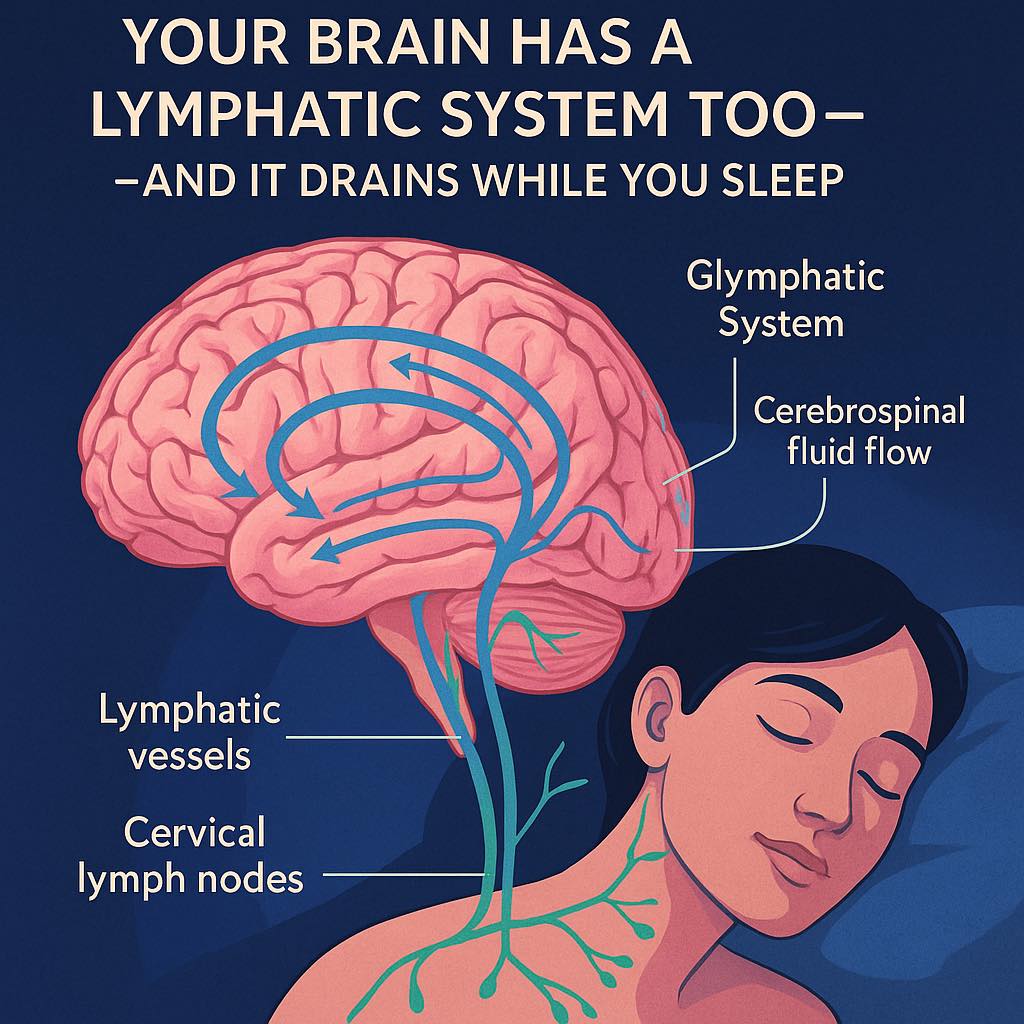
In 2012, a team of researchers at the University of Rochester made one of the most important medical discoveries of the century. They found something no one knew existed: the glymphatic system .
This is your brain's dedicated waste-clearance system. Think of it as a microscopic cleaning crew that works the night shift, flushing out toxins your brain accumulated during the day.
Here's how it works:
1. During sleep, your brain cells shrink by 60%.
This is not metaphor. Between your brain cells, there are tiny spaces. While you're awake, these spaces are compressed. When you sleep, your cells actually contract, creating more space between them.
2. Cerebrospinal fluid flows through these spaces.
Your brain produces cerebrospinal fluid that bathes and cushions your brain. During sleep, this fluid is pumped through the newly expanded spaces, washing away waste products.
3. The waste includes toxins linked to Alzheimer's.
Among the waste products cleared are beta-amyloid and tau proteins—the same proteins that form the plaques and tangles characteristic of Alzheimer's disease. Your brain literally cleans out Alzheimer's-related debris while you sleep.
4. This system is nearly 10 times more active during sleep than wakefulness.
Your awake brain doesn't have the space or the flow for effective cleaning. Sleep is when the real work happens.
WHAT HAPPENS WHEN THE GLYMPHATIC SYSTEM FAILS:
Short-term effects:
· Brain fog
· Poor memory consolidation
· Slower reaction times
· Irritability
· Difficulty concentrating
Long-term effects:
· Accumulation of beta-amyloid and tau proteins
· Increased risk of Alzheimer's and other dementias
· Accelerated brain aging
· Chronic neuroinflammation
The hard truth: Every night you shortchange sleep, you're leaving trash in your brain. Over years, that trash accumulates.
THE SLEEP POSITION FACTOR:
Research suggests that sleeping on your side may optimize glymphatic clearance. One study found that the glymphatic system is most efficient in the lateral (side) position compared to back or stomach.
This is not definitive—your body will naturally shift positions during sleep. But if you can, side sleeping (especially right side for vagus nerve stimulation, as we discussed in post #1) may support brain cleaning.
1. Light during sleep suppresses melatonin.
As covered in post #9, melatonin is essential for quality sleep. Light—even dim light—reaches your retina through closed eyelids and suppresses melatonin production.
2. Poor melatonin = poor sleep architecture = poor glymphatic function.
Your brain cycles through different sleep stages. Deep sleep (slow-wave sleep) and REM sleep are both critical for different aspects of cleaning and memory consolidation. Light disrupts this architecture.
3. Even waking to use the bathroom matters.
If you wake, use the bathroom, and turn on a bright light, you're essentially resetting your brain's sleep clock. The glymphatic system pauses and may not resume at full capacity when you return to sleep.
The solution:
· Red light only if you must have light
· Keep light low to the ground, facing away from your face
· Motion-activated path lights are ideal
· If you wake, try to navigate in darkness—your eyes will adapt within 30-60 seconds
The Nighttime Practices (Prepare for Cleaning):
1. Consistent Sleep Schedule (Non-Negotiable)
Your glymphatic system operates on a circadian schedule. Irregular sleep times mean irregular cleaning. Same bedtime, same wake time, every day.
2. Complete Darkness (As Dark as Possible)
Blackout curtains, eye mask, covered electronics. Even small light sources disrupt the deep sleep required for optimal glymphatic flow.
3. Cool Room (65-68°F)
Your brain expects temperature drops during sleep. Cool rooms support deep sleep. Hot rooms fragment sleep, reducing cleaning time.
4. No Alcohol (Especially Before Bed)
Alcohol disrupts sleep architecture, suppresses deep sleep, and impairs glymphatic function. Even one drink before bed reduces cleaning efficiency.
5. No Large Meals 3 Hours Before Bed
Digestion requires energy and competes with sleep processes. Your brain needs all available resources for cleaning.
6. Screen-Free 90 Minutes Before Bed
Blue light suppresses melatonin and delays sleep onset. Give your brain time to transition naturally.
The Daytime Practices (Support Night Cleaning):
1. Exercise (Daily)
Physical activity increases glymphatic function. One study showed that exercise enhances the clearance of waste products from the brain.
2. Hydration (Throughout the Day)
Your glymphatic system runs on cerebrospinal fluid, which is 99% water. Chronic dehydration reduces fluid production and impairs cleaning.
3. Manage Blood Sugar
High blood sugar damages blood vessels, including those that support glymphatic flow. Stable glucose levels support brain health.
4. Omega-3 Fatty Acids
Found in fish, flax, and walnuts, omega-3s support the membranes that surround brain cells, potentially aiding waste clearance.
5. Intermittent Fasting (Optional)
Some animal studies suggest fasting may enhance glymphatic function. This is preliminary, but aligning with your body's natural rhythms (not eating late) supports sleep quality, which supports cleaning.
THE SUPPLEMENTS THAT MAY HELP:
None of these replace good sleep hygiene, but some may support glymphatic function:
· Omega-3s (EPA/DHA): Support brain cell membrane health
· Magnesium glycinate: Improves sleep quality and depth
· Apigenin (from chamomile): May enhance sleep
· Melatonin (low dose, as needed): Supports sleep architecture
· B vitamins: Support overall brain metabolism
Always consult a healthcare provider before starting supplements.
HOW YOU KNOW IT'S WORKING:
Within one week of consistent sleep optimization:
· You wake feeling clearer, less foggy
· Your memory feels sharper
· You have more energy throughout the day
· Your mood is more stable
Within one month:
· You need less caffeine to function
· You remember names, details, and tasks more easily
· Your thinking feels faster
· You handle mental stress better
Long-term:
· You're protecting your brain against neurodegenerative disease
· You're maintaining cognitive function as you age
· You're giving yourself the best chance at mental clarity for decades to come
You have a cleaning crew in your brain. It works the night shift, every night, washing away the waste your thinking produced during the day. It removes toxins linked to Alzheimer's. It restores your brain's function for the next day.
But it only works if you let it.
Every late night, every blue light after sunset, every irregular schedule is telling your cleaning crew: "Don't come today. We're not ready." And the trash piles up.
You cannot outsmart this. You cannot supplement your way around it. You cannot will your brain clean with positive thinking.
You have to sleep. Deeply. Regularly. In darkness.
Your brain is counting on you to create the conditions for its own maintenance. It's the most important thing you do every night, and you're not even conscious for it.
That's the genius of the design—and the tragedy of ignoring it.
What's one change you'll make tonight to support your brain's cleaning crew?









Collective Insights
Be the First to Share
Your insights could spark meaningful conversations. Share your thoughts above!
Share Your Insight