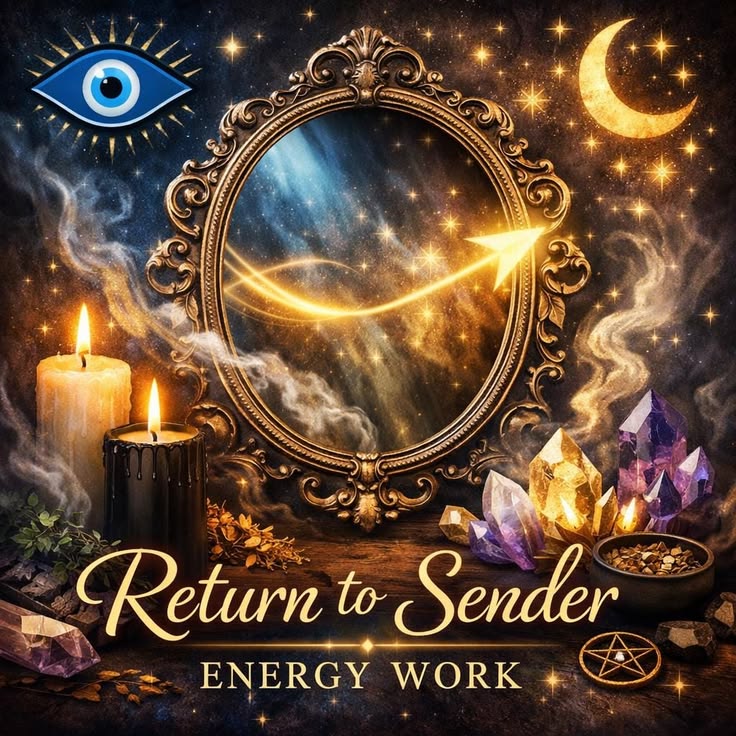
The Neuroscience of 'What You Send Out Comes Back': Why Every Tradition Warned About This
The Gospel of Thomas—Troubled Before Astonished
Have you ever heard of the Gospel of Thomas? I have a perfect example what Jesus said in that gospel. Here it is and it is in the saying 2:
Jesus said, "Let him who seeks continue seeking until he finds. When he finds, he will become troubled. When he becomes troubled, he will be astonished, and he will rule over the All."
This post is definitely going to be troubling just as every other post on this website is because we remove the veil of past indoctrination that which you have been falsely made to belief either entirely false or partially false which may have been intentional by the teacher/teachers of the faith which you belong to or may have been unintentionally taught by the teacher, guru or pastor without them understanding fully what they teach or preach but just acting according to personal conviction and upbringing, of course someone born into a Hindu family would be strongly convicted in their faith and tradition just as someone born into a Muslim family or even a Christian family. So sit tight, grab a healthy drink, sip with every word you read.
This is a map of genuine transformation. The one who seeks truth must pass through troubling—the dismantling of old certainties, the confrontation with uncomfortable realities. Only then comes astonishment, and only then comes sovereignty ("rule over the All").
For the person who has been practicing hatred, the truth is troubling. The truth is that every harmful thought was harming them first. The truth is that their enemy may be unaffected while they themselves have been poisoned. This realization is troubling—but it is the necessary prelude to astonishment and freedom.
You know people—maybe you've been one of them—who sit in quiet resentment, wishing harm on someone who wronged them. They replay the offense. They imagine the other person suffering. Sometimes they go further—visiting a spiritualist, a witch doctor, a native healer, requesting rituals to bring evil upon an enemy.
In some African countries for example, there are reports of individuals consulting "wrong-headed traditional spiritualists or bad-hearted juju-marabou mediums" for rituals to harm others, driven by "desperation or envy of somebody's wealth or success". In Zimbabwe, the concept of ngozi describes spiritual vengeance that returns to harm the killer and their bloodline. Across Africa, across the world, people believe they can send evil through spiritual means.
And then there's the quieter version: the person who never visits any healer, never performs any ritual, but whose mind is a constant stream of hate. They believe their thoughts are private. They believe no one is harmed but the target.
But what if the primary recipient of every harmful thought is the one who thinks it?
THE SCIENTIFIC TRUTH (What We Can Measure):
Let me be direct: There is no evidence that thoughts alone transmit damaging forces across distance to another person. What the evidence does show is that the person generating those thoughts is profoundly affected by them—neurologically, physiologically, and behaviorally.
The brain learns what it practices. And hatred, rehearsed repeatedly, rewires the brain for more hatred.
PART ONE: Does the Brain Know There Are "Other People"?
Before we can understand what happens when someone tries to harm another through thought or ritual, we must answer a deeper question: Does the brain perceive others as truly separate, or as extensions of the self?
The answer is clear: Yes, the brain has specialized systems for distinguishing self from other.
Key regions involved :
Brain Region Function
Temporoparietal junction (TPJ) Perspective-taking, distinguishing self from other
Medial prefrontal cortex (mPFC) Self-referential processing
Posterior cingulate cortex (PCC) Autobiographical self
Mirror neuron systems Simulating others while knowing they're not you
From infancy, humans learn self-other boundaries. When that system breaks down—in certain psychotic states—people can experience thought insertion or blurred identity boundaries. But in normal functioning, the brain clearly distinguishes others as separate agents.
The statement "the mind only knows the self" is not neuroscientifically accurate. The brain models both self and other, distinctly.
PART TWO: Why It Sometimes Feels Like "There Is No Other"
Here's where it gets subtle—and where spiritual traditions get their insight.
When you imagine another person, your brain uses your own neural circuits to simulate them. It activates representations inside your own nervous system. The "other" exists only as a model within your brain. You never directly experience another consciousness—you experience your brain's internal simulation of them.
This is the philosophical truth behind "there is no other": all experience occurs within your nervous system.
But that does NOT mean other people don't exist. It means your access to them is representational. The brain maintains a distinction. Always. Even during intense empathy.
PART THREE: What Happens When Someone Tries to "Hurt" Another Through Thought or Ritual
Now we come to the heart of this post.
When a person:
· Visualizes harming another
· Feels intense anger toward them
· Imagines sending negative force
· Rehearses their suffering
· Performs rituals intended to bring evil upon an enemy
What is happening in their brain?
Several things, all measurable:
1. Threat and aggression circuits activate.
The amygdala, hypothalamus, and sympathetic nervous system engage. The person enters a physiological state of hostility.
2. The brain simulates the target internally.
This is crucial: the simulation happens inside the attacker's own brain. When you imagine harming someone, your nervous system is activating aggression and stress patterns in yourself.
3. Stress hormones rise.
Cortisol increases. Heart rate changes. Muscle tension increases. The body prepares for combat—but there is no combat. There is only thought.
4. Neural pathways strengthen through repetition.
This is the most important mechanism—and the one that connects directly to ancient wisdom about karma and return.
PART FOUR: The Neuroscience of "What You Send Out Comes Back"
In Buddhism, karma is understood as the trace that actions (including thoughts) leave in the mind, making it more likely that similar actions will occur in the future. The Korean Zen teacher Daehaeng Kun Sunim explained:
"People are often careless about the thoughts they give rise to, assuming that once they forget about a thought, that thought is finished. This is not true. Once you give rise to a thought, it keeps functioning, and eventually its consequences return to you."
Modern neuroscience confirms this with precision.
The fundamental principle is known as Hebb's law, summarized as: "Neurons that fire together, wire together" . When you repeatedly activate certain neural patterns—like those associated with hatred, resentment, or wishes for harm—those connections become physically stronger.
Here's what happens at the cellular level :
Time Frame Neural Change
Short-term More neurotransmitters released; more receptors created
Long-term Neurons physically sprout new connections
Ongoing Networks become "hardwired"—the path of least resistance
Your brain becomes what you practice. If you practice hatred, your brain builds hatred circuits. If you practice resentment, your brain builds resentment circuits. These become your default, your automatic response to the world.
This is not karma as cosmic punishment. This is karma as neurobiology. The "return" is not a force reaching across the universe to strike you—it is your own brain, shaped by your own thoughts, becoming the instrument of your suffering.
PART FIVE: The Wiccan Threefold Law—Instant Karma
In Wiccan and NeoPagan traditions, there is a concept called the Rule of Three or the Threefold Law. It states that whatever energy a person puts out into the world—positive or negative—will be returned to that person three times .
The early incarnation appeared in Gerald Gardner's 1949 novel High Magic's Aid:
"Mark well, when thou receivest good, so equally art bound to return good threefold."
Later, Raymond Buckland popularized it as a law of karma: every beneficial or harmful action returns three times as powerful.
Some interpret this not as literal threefold return, but as impact on three levels: physical, emotional, and spiritual. When you act, you must consider how your deeds will affect your body, your mind, and your soul.
This is not a bad model for what neuroscience reveals. The person who practices hatred is harmed on all three levels:
· Physical: Chronic stress, elevated cortisol, sympathetic nervous system over-activation
· Emotional: Increased anger, decreased capacity for joy, social isolation
· Spiritual: The deep self becomes distorted, alienated from its own nature
The "return" is not magic—it is biology and psychology operating exactly as designed.
PART SIX: The African Context—Spiritual Attacks and Their Real Cost
Across Africa, the belief in spiritual attack is real and powerful. People consult traditional spiritualists for rituals to harm enemies. The Ghanaian writer Kofi Akosah-Sarpong describes individuals "moved by either desperation or envy of somebody's wealth or success" who engage "wrong-headed traditional spiritualists or bad-hearted juju-marabou mediums" for rituals .
In Zimbabwean tradition, ngozi is the avenging spirit of a murdered person that returns to harm the killer and their bloodline. The belief is that spiritual vengeance is real and must be appeased.
Here is the hard truth: The person who commissions such rituals is not primarily harming their enemy. They are:
· Strengthening their own aggression circuits
· Conditioning themselves in resentment
· Reinforcing negative emotional loops
· Increasing sympathetic nervous system activation
· Potentially developing chronic stress-related illness
The "spiritual attack" is real—but the target is the attacker. Their own mind becomes the weapon turned inward.
Psalm 7:15-16 (KJV)
"He made a pit, and digged it, and is fallen into the ditch which he made. His mischief shall return upon his own head, and his violent dealing shall come down upon his own pate."
· Meaning: This is the classic "poetic justice" Psalm. The wicked person plans evil, but it backfires on them. The "violent dealing" coming down on their own head is the equivalent of being killed by their own sword.
Psalm 37:14-15 (NIV)
"The wicked draw the sword and bend the bow to bring down the poor and needy, to slay those whose ways are upright. But their swords will pierce their own hearts, and their bows will be broken."
· Meaning: It explicitly states that the swords intended for the righteous will be turned against the wicked themselves.
PART SEVEN: What About When the Target Actually Suffers?
This is the question that must be answered honestly.
If the target later experiences misfortune, is that proof the ritual worked?
Not necessarily. Several mechanisms explain such outcomes without invoking supernatural transmission:
1. The nocebo effect. If the target believes they have been cursed, their stress response activates. Chronic stress can cause real physiological harm—illness, anxiety, impaired decision-making . The belief itself becomes the agent of harm.
2. Behavioral change in the attacker. The person consumed by hatred may unconsciously change their behavior toward the target—hostile glances, cold treatment, subtle aggression. This can provoke real-world consequences.
3. Statistical probability. Misfortune is common. When it happens after a ritual, the human mind connects the two events—forgetting all the times misfortune occurred without any ritual, and all the rituals that produced no visible effect.
4. Self-fulfilling prophecy. The attacker, expecting the target to suffer, may interpret neutral events as confirmation, building a narrative of successful magic that reinforces their belief system.
None of these require supernatural transmission. All are consistent with known psychological and physiological mechanisms.
PART EIGHT: The Hard Psychological Reality
When someone tries to spiritually attack another, they are primarily:
· Strengthening their own aggression circuits
· Conditioning themselves in resentment
· Reinforcing negative emotional loops
· Increasing sympathetic activation
· Shaping their own personality toward hostility
The brain learns what it practices. Hatred practiced repeatedly rewires the practitioner.
A 2012 study found that people facing uncertain, uncontrollable outcomes were more likely to act charitably—as if some part of them understood that "what goes around comes around". The researchers suggested that deep down, people know that good things happen to those who do good.
The reverse is also true. Those who practice harm are shaping themselves to receive harm—not from the universe, but from their own biology.
A Note on Mystery: The neuroscience in this post describes what happens in the brain during harmful thoughts and rituals. The neural strengthening, the stress activation, the behavioral changes—these are real, measurable, and valuable. They explain how the practitioner is affected.
But science describes mechanism—it does not exhaust meaning.
The ancient traditions—African, Wiccan, Buddhist, Christian—all encoded the same warning: what you send out comes back. They called it karma, threefold law, ngozi, the sword that turns in the hand. They observed, over centuries, that those who practice harm are harmed.
Whether this is purely biological or whether something beyond measurement also operates is a question science cannot answer. What we know is that it works. What we observe is that it holds true across cultures and millennia.
What is not open to question: The person who practices hatred is the primary recipient of hatred's effects. Their own nervous system becomes the battleground. Their own mind becomes the weapon turned inward.
What happens when someone tries to harm another through thought or ritual. Here is the answer, clear and unvarnished:
The harm returns to the sender—not through cosmic punishment, but through neurobiology.
Every hateful thought strengthens the neural pathways for hate. Every resentful rehearsal deepens the grooves of resentment. Every ritual of harm conditions the practitioner in harm. The brain becomes what it practices. The body absorbs what the mind generates.
This is instant karma. Not karma that waits lifetimes. Not karma that requires cosmic bookkeeping. Karma that operates in real time, in measurable tissue, in the only place where "you" truly reside: your own nervous system.
The Gospel of Thomas says: "When he finds, he will become troubled. When he becomes troubled, he will be astonished". The troubling truth is that your enemy may be untouched while you poison yourself. The astonishment comes when you realize you can stop—that you can choose different thoughts, different practices, and reshape your brain toward peace.
The threefold law is not magic. It is neurobiology. And it operates whether you believe in it or not.
Every thought is a practice. Every practice shapes the brain. Every brain shapes the person. And the person you are becoming is the only "return" that ultimately matters.
I must re-emphasize that while the distinction is there, the physiological cost is shared. The brain knows it's them, but the cortisol is definitely yours.
So if thoughts are internal and only hurts the thinker then what does the awakened person who understands this do to actually make their attack more effective and affect the target if not spiritual means and without committing a crime against the law, of course it’s by manipulating their targets thoughts to work against them and thereby being their own downfall indirectly, hand your target the sword and they help you use it against themselves. Now, I am not about to teach something dark but it’s real and powerful. Stay plugged in as in future posts I will reveal it for educational purposes only.
What have your thoughts been practicing today?





Collective Insights
Be the First to Share
Your insights could spark meaningful conversations. Share your thoughts above!
Share Your Insight